
The 5 Invisible Design Decisions That Make Ranch Kitchens Actually Feel Cozy
We’ve walked through hundreds of ranch kitchens over the past two decades. Most homeowners show us their Pinterest boards filled with ranch-style kitchen ideas: white shaker cabinets, subway tile backsplashes, and farmhouse sinks.
Then we ask them to describe their morning routine.
The disconnect becomes obvious immediately. They’re collecting ranch-style kitchen ideas based on what looks good in photos, not on how they actually live.
The ranch kitchens that truly transform daily life share something you can’t see in inspiration photos. An effective cozy ranch kitchen design is built around invisible design decisions that govern how natural light moves through the space, how your body flows during meal prep, and whether your family naturally gathers while you cook.
Here’s what actually makes a ranch kitchen feel like home.
1. Natural Light Patterns Shape Your Entire Day
Most ranch homes were built between the 1950s and 1970s, with kitchens positioned at the back of the house. When exploring ranch-style kitchen ideas, you inherit a specific light pattern whether you realize it or not.
We’ve learned to map how sunlight enters a kitchen throughout the day before we discuss a single finish material. Morning light hits differently than afternoon light. The direction your kitchen faces determines whether you’re cooking breakfast in shadow or flooding the space with natural brightness.
Research shows that each additional hour spent in natural light decreases the risk of depression and improves mood independent of lifestyle or economic status. Office workers with limited natural light reported adverse effects on mood, productivity, and sleep.
Your kitchen isn’t just a cooking space. It’s where you start your day, where you wind down in the evening, and where your circadian rhythm gets reinforced or disrupted.
When we redesign a ranch kitchen, we track three light moments:
- 6-8 am: Where does morning light enter? Can you prep coffee and breakfast without turning on overhead lights?
- 3-5 pm: Does afternoon sun create glare on your workspace or warm the room naturally?
- Evening: How does the transition from natural to artificial light feel as you prepare dinner?
We’ve seen families completely change their morning routine after we repositioned a window or added a skylight. These ranch kitchen lighting ideas make a real difference. One client told us she actually started enjoying breakfast prep because the space felt alive with natural light instead of relying on harsh overhead fixtures at 6:30 am.
The cozy feeling you’re chasing isn’t about paint color. It’s about whether the space works with natural rhythms or fights against them.
However, when light patterns are correct, color becomes powerful, something we explore in Choosing the Right Kitchen Paint Colors for Any Style, where we explain how tone shifts depending on natural exposure. So you can make informed decisions.
2. The Kitchen Triangle Fails Most Families
You’ve probably heard about the kitchen work triangle: the path between your sink, stove, and refrigerator should form an efficient triangle with each leg measuring between 4 and 9 feet.
The concept came from Lillian Moller Gilbreth in the 1920s. She applied factory time-motion studies to household tasks and demonstrated efficiency gains by preparing strawberry shortcake twice: once in a random layout and once in her strategically designed L-shaped layout.
Why the Work Triangle No Longer Reflects Real Life
Here’s what changed: recent research analyzing 38 real apartment kitchens found that work triangle compliance had a limited impact on actual movement efficiency. The study concluded we need a customized kitchen design that reflects how you actually behave, not theoretical principles from a century ago. This matters especially when evaluating ranch-style kitchen ideas.
We don’t design around the triangle anymore. We design around your actual cooking patterns.
Designing Around How You Actually Cook
Do you meal prep on Sundays? You need extended counter space near the refrigerator, not a compact triangle.
Do you cook while helping kids with homework? You need sightlines to the dining table or island, which often breaks the traditional triangle entirely.
Does your partner join you in the kitchen during dinner prep? You need dual work zones that don’t force you to navigate around each other constantly.
How Observed Movement Shapes Better Ranch Kitchens
The ranch kitchens that feel most comfortable are the ones designed around observed behavior. Strong ranch kitchen layout ideas emerge from tracking real movement patterns.
We ask clients to track their movement for a week before we finalize the layout. Where do you naturally set down groceries? Where do you stand when you’re waiting for water to boil? Where does your body want to pivot when you’re moving between tasks?
Your kitchen should support the choreography you already perform, not force you to learn new movements because a design principle says so.
3. Open Concept Only Works If You Design the Sightlines
Every ranch kitchen remodel conversation eventually arrives at the same question: should we open up the wall to the living room? This open-concept ranch kitchen approach is one of the most popular ranch-style kitchen ideas we discuss.
Why Opening the Wall Isn’t the Hard Part
The data suggests you probably should. Open concept layouts can increase home value by up to 15%, and research shows open-plan kitchens increase family interaction by up to 40% compared to closed-off galley kitchens.
But here’s what renovation shows don’t tell you: opening the wall is the easy part. Designing what you see through that opening determines whether the space actually feels cozy or just exposed.
Mapping Sightlines Before Demolition
We’ve learned to map sightlines before we remove a single stud.
When you’re standing at the sink doing dishes, what do you see? If it’s the back of the couch and a TV, you’ve created a sightline to distraction, not a connection.
Sightlines That Support Conversation
When you’re prepping dinner at the island, can you maintain eye contact with someone sitting in the living room? If the counter height blocks natural conversation, you’ve opened the space but maintained the isolation.
What Guests See Matters More Than You Think
When guests are in the living area, what do they see when they look toward the kitchen? If it’s a cluttered counter and dirty dishes, the openness works against you.
A Ranch Kitchen Before-and-After That Changed Daily Life
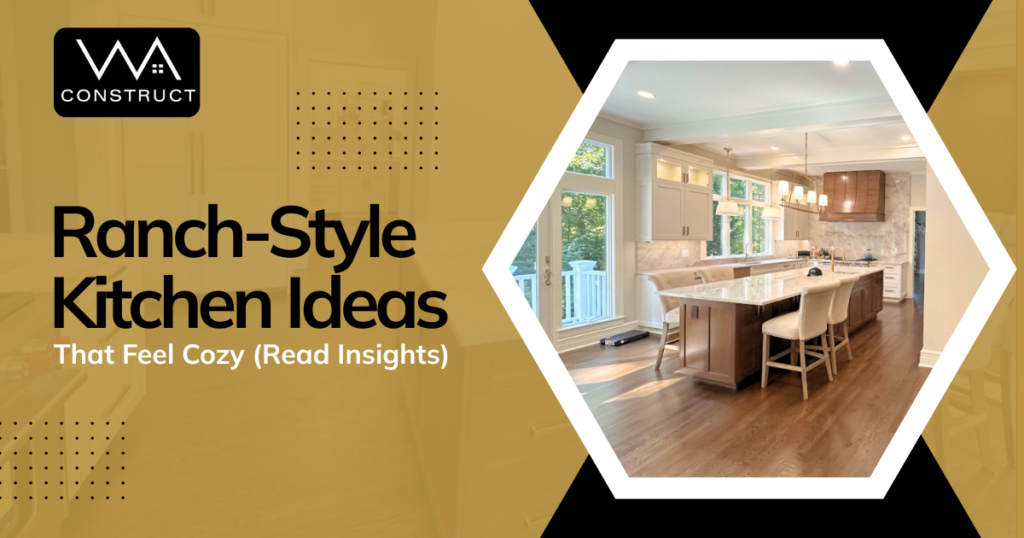
One family we worked with had a clear goal: they wanted their kitchen remodel to increase family dinners. This ranch kitchen’s before-and-after transformation was dramatic. We opened the wall between the kitchen and living room, but more importantly, we positioned the island so the primary cook could see the dining table and maintain conversation while prepping food.
Result:
Family dinners went from twice a week to nearly every night. The kids started doing homework at the island while their parents cooked. The design didn’t just change the space. It changed behavior.
Open concept works when you design the connection points, not just remove the barriers.
As we saw in The Kitchen That Looked Perfect But Felt Wrong: What Four Walls Revealed, simply knocking down walls without redefining zones often creates stress instead of connection.
4. Movement Patterns Create Comfort or Stress
Your brain processes spatial relationships in ways you don’t consciously register. Layouts that force awkward movements, excessive steps, or uncomfortable reaching create physical stress that translates into psychological dissatisfaction with the space.
We watch how people move through their existing kitchen before we design the new one.
- Do you turn naturally, or do you have to stop, turn, and reorient? Natural walking paths follow curved or diagonal lines. Kitchens that force sharp turns or awkward pivots feel less comfortable than those allowing smooth, natural movement patterns.
- Do you have to reach across your body to access frequently used items? Right-handed cooks should have their most-used tools and ingredients positioned for right-hand retrieval. This seems obvious, but we’ve seen countless kitchens where the design forces you to reach across yourself dozens of times per meal. Even a small ranch kitchen makeover should address this fundamental issue.
- Do you have a clear landing zone for hot pots and pans? If you have to walk more than two steps from the stove to set down something hot, you’ll feel the friction every time you cook.
Research on kitchen spatial layouts found that high integration value (where paths to reach different functional areas are closer) directly increases activity efficiency. More decentralized spatial systems increase complexity and completion time.
The cozy feeling you want comes from effortless movement. When your body can flow through tasks without conscious navigation, the space feels intuitive. When you have to think about each movement, the space creates low-grade stress that accumulates over time.
When implementing ranch-style kitchen ideas, we design around three movement zones:
- Prep zone: Where you chop, measure, and assemble ingredients
- Cook zone: Where you apply heat and manage active cooking
- Cleanup zone: Where you wash, dry, and store
These zones should connect in a smooth path that matches your natural movement, not force you to backtrack or navigate obstacles.
5. The Island Position Determines Family Interaction
Most ranch kitchen remodels include an island. The question isn’t whether to add one. It’s where to position it and how to orient the seating.
We’ve seen islands that create gathering spaces and islands that sit empty except when someone needs extra counter space. The difference comes down to three positioning decisions:
- Distance from the perimeter: You need 42-48 inches of clearance for comfortable movement. Less than that, and the island becomes an obstacle. More than that, and the kitchen loses the cozy, contained feeling that makes ranch homes comfortable. This balance is essential in modern ranch kitchen design.
- Orientation to the main workspace: If you’re cooking at the range, can you turn and interact with someone at the island without leaving your station? The best islands create a social triangle where the cook can maintain conversation and eye contact while working.
- Seating direction: Stools facing the living room create a barrier. Stools facing the cook create a connection. We’ve watched families completely change their interaction patterns based solely on which direction the island seating faces.
Research analyzing kitchen design and mental health found that open-plan kitchens are especially important for families with children, encouraging kids to observe and participate in cooking while allowing parents to multitask and maintain supervision.
The island isn’t just additional counter space. It’s the connection point that determines whether your family naturally gathers while you cook or scatters to separate rooms.
We ask clients to imagine a typical Tuesday evening. Where do the kids naturally land when they get home? Where does your partner stand when they’re talking to you while you cook? Where do you want people to be?
Then we position the island to support those natural gathering points.
What Actually Makes a Ranch Kitchen Feel Like Home
Many homeowners exploring inexpensive kitchen renovations assume finishes alone create warmth, but without aligning layout, light, and movement, even a budget-friendly remodel can feel disconnected. The cozy feeling you’re chasing doesn’t come from cabinet color or countertop material. It comes from invisible design decisions that align the space with how you actually live.
- Natural light patterns that support your daily rhythm instead of fighting against it.
- Movement flows are designed around your observed behavior, not theoretical principles.
- Sightlines that create connection points, not just open space.
- Spatial layouts that allow effortless movement through tasks.
- Islands are positioned to support family interaction, not just provide extra counter space.
We’ve built enough ranch kitchens to know the difference between spaces that photograph well and spaces that transform daily life. The best ranch-style kitchen ideas are designed around the invisible systems that govern comfort, connection, and natural rhythm.
Your Pinterest board can guide the aesthetics, whether you prefer rustic ranch kitchen decor or a mid-century ranch kitchen remodel. But the foundation needs to be built around how you actually move, gather, and live in the space.
That’s what makes a ranch kitchen feel cozy.
Ready to design a kitchen around how you actually live?
Schedule a strategy call with WA Construct, and we’ll map your natural movement patterns, light exposure, and family interaction points before we discuss a single finish material.
Because the best ranch kitchens are built on invisible decisions that transform daily life, not just surface-level aesthetics.
Frequently Asked Questions
A cozy ranch kitchen is created through zoning, light control, and layout decisions—not just finishes or colors.
Yes, when sightlines, work zones, and noise control are planned before walls are removed.
Most fail because walls are removed without replacing them with architectural elements that define space.
Not as much; modern ranch kitchens perform better when designed around real movement patterns instead of rigid triangles.
Focus on clear work zones, proper island placement, and natural movement paths rather than oversized features.