
The Kitchen That Looked Perfect But Felt Wrong: What Four Walls Revealed
A consultation last spring began with a homeowner who had already made up her mind.
“We want open-concept. Like the magazines.”
She showed inspirational photos on her phone. Gleaming islands. Endless sightlines. Spaces that were photographed like showrooms and looked exactly like the before-and-after open floor plan transformations she had been saving for months.
One question changed everything:
“What happens at 7 am on Tuesday when your kids need breakfast, your husband needs coffee, and you’re trying to pack lunches?”
She paused.
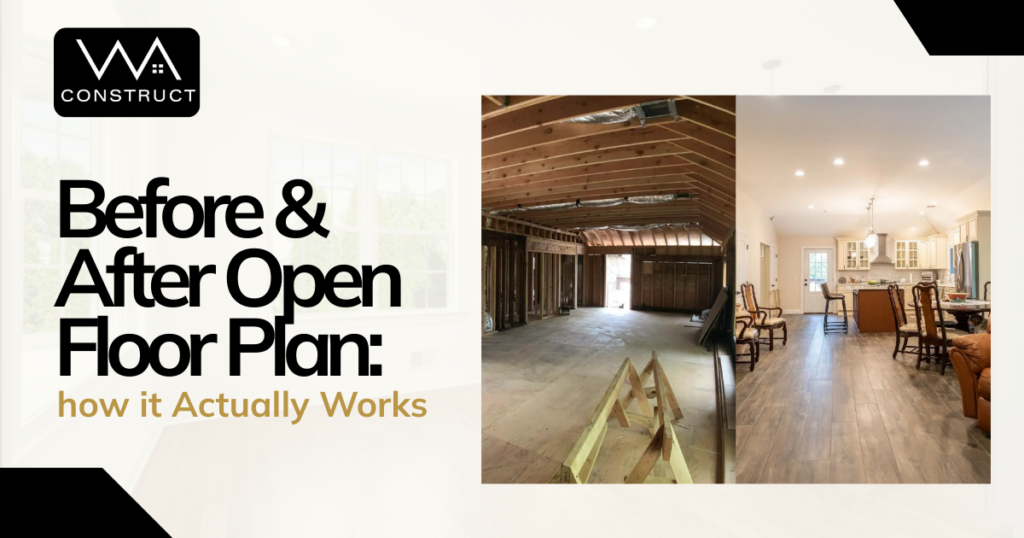
Because removing walls is easy. Creating a space that actually works when life gets messy: that’s architecture. And every before-and-after open floor plan tells a very different story once people start living in it. This is exactly where many homeowners chasing inexpensive kitchen renovations go wrong, focusing on demolition and aesthetics instead of how the space performs under real daily pressure.
The Regret No One Mentions
Here’s what the design blogs don’t tell you: open-concept layouts consistently rank among the kitchen trends homeowners regret most.
Not because they look bad.
Because they live badly.
In many open-concept kitchen-living room layouts, cooking odors spread throughout the home. Noise from the kitchen invades every conversation. The visible mess creates constant pressure to maintain showroom standards. And the fundamental challenge hits hardest: creating distinct zones without walls becomes nearly impossible, resulting in clutter and no clear separation between cooking, dining, and living.
This is one of the most common open floor plan mistakes to avoid.
The problem isn’t the concept. It’s the execution of the before-and-after open floor plan.
The Mountainside Project: Four Walls, One Mistake
The house sat on a slope in Mountainside. Beautiful bones. Terrible flow.
The kitchen was boxed in by four walls. The dining room felt like a hallway. The family room existed in a different zip code. Three separate spaces that should have been talking to each other but weren’t.
The homeowner wanted them connected. The solution required them to be defined.
There’s a difference.
Connection without definition creates chaos. You end up with one giant room where everything competes for attention, and nothing feels intentional, a common issue in poorly executed open floor plan remodel ideas.
So we removed the walls. But we replaced them with something better, using lessons learned from countless before-and-after open floor plan projects.
The Arched Doorway: A Boundary You Can See Through
Instead of a flat opening where the kitchen wall used to be, we built an arched transition.
Not decorative. Functional.
The arch does three things simultaneously:
- It frames the kitchen as a distinct zone
- It maintains visual flow into the dining area
- It signals a shift in purpose without blocking movement
The arch creates a psychological boundary between zones, one of the most effective open floor plan design tips when walls are removed.
Ceiling Height Changes: The Invisible Organizer
Any ceiling that is all one height is boring, no matter whether it’s high or low.
We dropped the ceiling over the kitchen work zone by eight inches.
Not enough to feel claustrophobic. Just enough to create intimacy around the cooking area while the dining and living spaces soared above at full height.
The result? The kitchen feels focused. Contained. Like a cockpit designed for efficiency.
Then you step into the dining area, and the ceiling lifts. The space expands.
You’ve moved from task mode to gathering mode without encountering a single wall.
This is what architectural zoning looks like when it’s done right, especially in a modern open floor plan remodel or even a small home open floor plan remodel, where definition matters more than square footage.
The Island That Directs Traffic
The homeowner wanted a massive island. “Big enough for everyone to gather around.”
The problem became clear: that would destroy the kitchen’s functionality.
Strategic island sizing requires adequate clearance zones around the perimeter for comfortable movement.
An oversized island doesn’t create gathering. It creates bottlenecks, one of the most overlooked open floor plan mistakes to avoid.
We sized the island to complement the kitchen triangle, positioning it to separate cooking from social spaces without blocking the natural flow between zones.
One side faces the range and sink: that’s the work zone. The other side faces the dining area with seating; that’s the social zone.
The island became a traffic controller, not a traffic jam.
This is what happens when before-and-after open floor plan decisions are made for real life, not photos.
The Work Zone Revolution
The traditional kitchen triangle is dead.
Designers are abandoning it in favor of strategic work zones that allow multiple people to move through the kitchen without creating traffic jams. This shift shows up clearly when studying real open floor plan before and after photos.
In the Mountainside project, we created three distinct work zones:
Zone 1: Prep and Cook
Range, primary sink, main countertop. This is command central. Everything within arm’s reach. No one crosses this zone during active cooking.
Zone 2: Cleanup and Storage
Dishwasher positioned on the side of the sink closest to the upper cabinet storage. Dishes move from the dishwasher to the cabinet without crossing the cooking path.
Zone 3: Beverage and Snack
Secondary sink, coffee station, snack storage. Located at the far end of the island. Kids can grab what they need. Guests can pour wine.
This zoning strategy is essential for successful before-and-after open floor plan transformations.
The Flooring Transition: A Line You Don’t Notice
We used different flooring materials to create natural divisions that maintain visual flow.
Porcelain tile in the kitchen: durable, easy to clean, and visually distinct.
Wide-plank oak in the dining and living areas: warm, inviting, clearly residential.
The transition happens at the arched doorway, reinforcing the zoning without visual interruption. This technique is one of the most subtle open floor plan decorating ideas that actually works.
What Actually Failed (And What WA Construct Do Differently)
The pendant lights over the island.
They looked perfect in photos. They created glare during meal prep.
The issue was simple: aesthetics were prioritized over task performance. The pendants were scaled and positioned for visual balance, but not for real working conditions.
This is where open floor plan lighting ideas must be handled with care. Decorative fixtures belong over social zones, not over active prep areas where shadows and glare interfere with visibility.
At WA Construct, lighting is planned as part of the architecture, not as an afterthought. We specialize in layered lighting strategies that separate task lighting from ambient and decorative lighting, ensuring each zone supports how it’s actually used.
The lesson is straightforward: beauty that interferes with function isn’t beauty. It’s a design mistake, one that proper planning prevents before installation, not after correction.
If you’re weighing layout changes versus cosmetic improvements, review our breakdown of Smart Kitchen Upgrades That Add Real Value before deciding where to invest
The Tuesday Morning Test
Here’s how we know the Mountainside kitchen works.
Six months after completion, an unannounced visit on a Tuesday morning revealed the truth.
The homeowner was packing lunches. Her husband was making coffee. Two kids were eating cereal at the island.
No one was in anyone’s way. That’s the real test of a before-and-after open floor plan.
That’s the difference between designing for photos and designing for life, a distinction we break down in Why Your Dream Kitchen Will Fail (And How to Design It Backwards Instead), where we explain how planning around daily routines prevents regret later.
The Framework: How to Think About Open-Concept
If you’re considering removing walls, ask these questions before demolition begins:
- What happens during peak chaos?
- How will you define zones without closing them off?
- Where does traffic naturally flow?
- Can multiple people use the space simultaneously without conflict?
- Does the island serve the space or dominate it?
These questions separate successful open floor plan remodel ideas from regrettable ones.
What This Means for Your Project
Open-concept isn’t about removing walls.
It’s about replacing visible barriers with invisible ones.
The most successful before-and-after open floor plan projects treat architecture as a communication system. Ceilings, flooring, lighting, and transitions guide behavior without instruction.
That’s how an open plan stops feeling wrong and starts working.
Conclusion
A successful open-concept home isn’t defined by how wide the space feels; it’s defined by how well it works when life is busy. The difference between a beautiful before-and-after open floor plan and one that quietly fails comes down to planning, zoning, and decisions made before demolition ever begins. When architecture guides behavior, open spaces stop feeling chaotic and start feeling intentional.
Planning an open floor plan remodel?
Schedule a strategy consultation with WA Construct and get clarity before walls come down.
Frequently Asked Questions
Yes, when zones are clearly defined to manage noise, mess, and daily traffic.
Removing walls without replacing them with architectural zoning.
Ceiling changes, flooring transitions, lighting layers, and architectural openings create boundaries.
They can, but small homes require stronger zoning to avoid feeling cluttered.
Before demolition begins, during architectural and layout planning.