
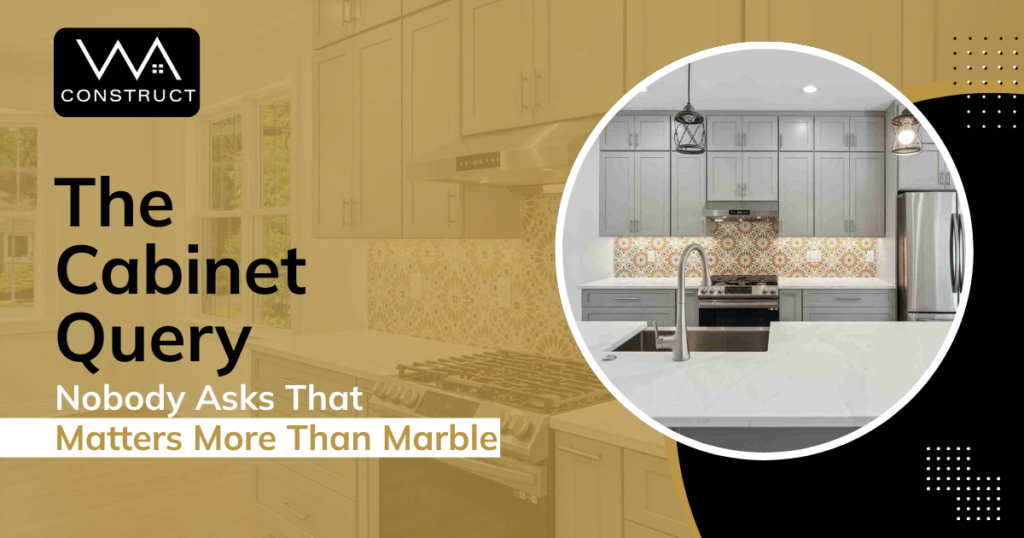
The Cabinet Question Nobody Asks That Matters More Than Marble
We’ve sat through hundreds of kitchen design meetings. Homeowners agonize over countertop materials and cabinet door styles for hours. They’ll debate marble versus quartz like it’s their most important decision. Then they’ll approve cabinet specifications in under five minutes.
This is backwards. The countertop you stare at matters less than the drawer you open forty times a day for the next twenty years. Yet most people never ask the question that actually determines whether their kitchen functions beautifully or falls apart.
That question is simple but revealing: “How are your cabinet boxes constructed, and what hardware system do you use?” This single question reveals everything about whether a builder understands quality or just checks specification boxes. The answer separates firms that deliver lasting value from those optimizing for initial appearance.
Cabinet construction is just one of several decisions that quietly determine whether a remodel succeeds or becomes a source of long-term frustration. We break down how cabinetry, layout, timelines, and infrastructure decisions connect in our complete kitchen remodeling guide, which explains what must be decided before design meetings begin.
Stock vs Semi-Custom vs Custom Cabinets: Kitchen Cabinet Types Explained
Understanding stock kitchen cabinets, semi-custom kitchen cabinets, and custom kitchen cabinets isn’t just about price points. They represent completely different construction philosophies that shape how your kitchen functions for decades.
Stock cabinets are mass-produced with economical materials. You get what’s available with zero customization. Melamine interiors and basic construction make them suitable for quick turnarounds but limited in longevity.
Semi-custom kitchen cabinets balance flexibility against availability. You can modify dimensions, finishes, and interior features while benefiting from factory precision. Factory finishes from large manufacturers sometimes exceed smaller operations.
Custom kitchen cabinets offer unlimited design control and premium hardwoods. You’re paying for exactly what you want with the longest lead times and highest material quality.
Here’s what most builders won’t tell you: the tier matters less than the construction details within each tier.
Feature | Stock Cabinets | Semi-Custom Cabinets | Custom Cabinets |
Customization | None | Moderate | Unlimited |
Materials | Economical melamine interiors | Quality | Premium |
Lead Time | Immediate | 4–8 weeks typical | 8–12+ weeks depending on complexity |
Design Flexibility | Limited to catalog options | Good | Complete |
Best For | Quick turnarounds & rentals | Balance of quality & timeline | Forever homes & luxury remodels |
The Infrastructure Nobody Photographs: Your Cabinet Comparison Guide
Whether choosing custom kitchen cabinets or semi-custom kitchen cabinets, cabinet boxes are either plywood or particleboard. This choice determines everything about longevity and performance.
Plywood construction delivers:
- Exceptional screw-holding strength that maintains hardware integrity
- Superior moisture resistance that survives inevitable kitchen exposure
- Decades of structural stability without swelling or degradation
When water contacts an unfinished edge around your dishwasher or sink, plywood survives while particleboard swells. We’ve seen gorgeous kitchens compromised by cabinet boxes that couldn’t handle normal kitchen moisture.
Particleboard with proper edge banding meets industry standards, but kitchens aren’t controlled environments. They’re active spaces with steam, spills, and humidity. For families planning to stay long-term, plywood construction is non-negotiable.
Premium remodels with plywood remain functionally sound long after cheaper alternatives require replacement.
Dovetails: The Visibility Versus Value Debate
Dovetail drawer construction gets marketed as a premium feature in custom kitchen cabinets, and the reality is more nuanced than most builders explain. Dovetails create strong mechanical joints that resist pulling apart under stress. They signal craftsmanship and attention to detail.
We’ve watched homeowners pull out drawers to show visitors the dovetails because they understand these joints represent quality. Modern adhesives have changed the equation; quality glued joints can be remarkably strong when executed properly.
However, the distinction matters most in perception and resale value. In neighborhoods where buyers understand quality markers, dovetails carry weight as documentation of superior construction. They’re visible proof that a builder didn’t cut corners.
The question is whether the premium aligns with your goals and timeline. For families building their forever home, dovetails represent lasting craftsmanship that compounds value through decades.
The Soft-Close Hierarchy Nobody Explains
Every builder now advertises “soft-close drawers,” but this buzzword obscures a massive quality spectrum across semi-custom kitchen cabinets and custom kitchen cabinets. Premium undermount systems from manufacturers like Blum represent the industry standard for luxury applications.
Quality soft-close systems deliver:
- Smooth engagement before full closure with feather-light glide
- Decades of daily use without degradation or failure
- Quiet operation that remains consistent through years of cycles
Budget soft-close systems use the same terminology but lack engineering precision and durability. They’ll fail within years rather than decades, requiring repairs that disrupt your kitchen.
Drawer boxes must be built to exact dimensions with specific clearances for these systems to function properly.
If your builder doesn’t discuss drawer slide load ratings or manufacturer names, they’re selling a buzzword rather than a system. We specify hardware by name.
The Conversation That Reveals Everything
When we walk clients through cabinet specifications, we’re not trying to upsell. We’re aligning expectations with reality so there are no surprises years down the line.
Most builders won’t proactively discuss box construction material, drawer slide load ratings, or soft-close mechanism manufacturers. These details don’t create emotional responses in design meetings. They’re invisible until they fail, and by then the builder has moved on.
But the drawer that glides effortlessly after years represents actual value delivery. The cabinet box that survives a dishwasher leak represents structural integrity.
Questions that reveal quality commitment:
- What thickness is the cabinet box plywood?
- Are edges sealed against moisture?
- Is hardware specified by manufacturer name?
- What’s the load rating on drawer slides?
Firms delivering premium construction welcome this scrutiny. Their specifications document quality that outlasts trends.
Most homeowners don’t realize how much a builder’s process reveals about long-term quality. We outline the warning signs and standards that matter most in our article on how to choose the right kitchen remodeling contractor, including what reputable firms document upfront and what others avoid discussing. |
Why Construction Details Matter More Than Aesthetics
Premium cabinet construction delivers a substantially longer functional lifespan than entry-level alternatives. The difference becomes obvious over time but remains invisible during initial installation.
Understanding stock cabinets’ cost versus semi-custom cabinets’ cost versus custom cabinets’ cost requires looking beyond the price tag. We explain how construction quality impacts lifetime ownership and replacement cycles in our guide to how cabinet construction affects long-term remodel costs. This kitchen cabinet type-explained approach reveals that remodels using stock cabinets with particleboard boxes need replacement relatively quickly. Premium construction with plywood boxes remains functionally sound for decades.
Paying more initially for quality construction reduces lifetime ownership costs while eliminating premature replacements. It compounds value through daily use that never degrades.
We’ve seen beautiful kitchens compromised by failing hardware within years. We’ve also seen well-constructed kitchens function flawlessly after decades of heavy use.
The difference isn’t luck; it’s specification decisions made during design. When we recommend plywood over particleboard, we’re protecting your investment and daily experience.
Best Kitchen Cabinets for Remodel: What Separates Premium From Budget
The visible aesthetics often photograph identically. Door styles look similar. Finishes appear comparable. The difference lives in the infrastructure you feel but never see during the design phase.
Premium construction reveals itself through:
- The drawer that closes silently after years of daily cycles
- The cabinet box that doesn’t swell when moisture reaches it
- The hardware system engineered to prevent wobble
It’s the builder who explains these details before you ask because they understand quality compounds through daily interaction rather than initial impression.
When choosing the best kitchen cabinets for a remodel, the upgrades that matter most are the ones you stop noticing because they work flawlessly. That’s not marketing language; that’s structural accountability.
Before you approve your next cabinet specification, ask the questions most people never think to ask. The answers will tell you everything.
Why WA Construct Builds Kitchens That Last Generations
We specialize in custom kitchen cabinets and semi-custom kitchen cabinets with plywood construction, premium hardware systems, and construction methods that survive decades of family life. Our clients aren’t just buying a kitchen; they’re investing in daily functionality that doesn’t degrade.
Transparent Specification Process
We walk every client through cabinet construction details before design meetings because we know these decisions matter more than tile selection. We don’t hide behind vague promises; we specify manufacturers, load ratings, and material thicknesses in our proposals because we stand behind every component.
Quality Hardware Selection
When we recommend dovetail drawers and Blum hardware, we’re documenting quality you’ll feel every time you open a drawer years from now. Premium undermount systems and precision-engineered mechanisms ensure decades of flawless daily operation.
Guaranteed Performance Standards
The kitchens we deliver in North and Central New Jersey function as beautifully after years of use as they did on installation day. That’s a systematic commitment to specifications most builders won’t discuss; we make guarantees other firms avoid.
Conclusion
The cabinet decisions you make during design determine whether your kitchen delights you for decades or disappoints you within years. Box construction, drawer joinery, and hardware quality matter more than door styles and finish colors because they shape every interaction with your kitchen. Most builders won’t proactively explain stock vs semi-custom vs custom cabinets. distinctions because they complicate sales conversations and raise project expectations. But families investing in their forever homes deserve to understand what they’re actually buying beneath the beautiful exterior.
The questions nobody asks are the ones that reveal whether your builder understands quality or just checks specification boxes. When you work with a firm that welcomes scrutiny and specifies components by name, you’re partnering with builders who stake their reputation on lasting performance.
Ready to build a kitchen that functions beautifully for decades? Let’s discuss cabinet construction details that actually matter.
Schedule your consultation with WA Construct today, where quality isn’t negotiable and guarantees aren’t optional.
Frequently Asked Questions
This cabinet comparison guide shows that stock kitchen cabinets are mass-produced with fixed dimensions, semi-custom kitchen cabinets offer adjustable dimensions and finish options, while custom kitchen cabinets provide unlimited design control with premium materials. The tier matters less than the construction quality within each category.
Plywood cabinet boxes hold screws better, resist moisture damage, and last significantly longer than particleboard alternatives. For families planning to stay long-term, plywood survives inevitable moisture exposure and eliminates premature replacement costs.
Dovetail joints create strong mechanical connections that resist pulling apart and signal quality craftsmanship. For luxury remodels, they document commitment to traditional craftsmanship standards that educated buyers appreciate.
Ask your builder to specify the manufacturer name and load ratings for drawer slides. If your builder can’t name the hardware manufacturer or discuss load ratings, you’re likely getting budget alternatives.
Ask about cabinet box material thickness, edge sealing against moisture, hardware manufacturer names, drawer slide load ratings, and joinery methods. Builders who welcome detailed questions are documenting their commitment to quality.
Well-constructed cabinets with plywood boxes and premium hardware should function reliably for decades with minimal maintenance. Budget construction with particleboard often requires repairs or replacement within years.