
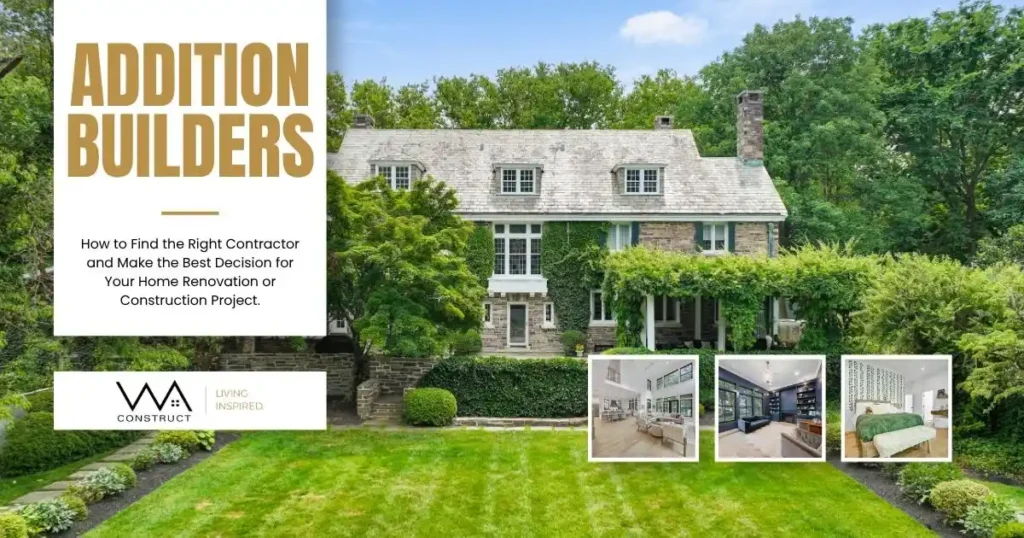
Addition Builders: How to Find the Best for Your Project
Some home additions look like they were always part of the original plan.
Others look like someone attached a room to the house and hoped the siding would do the explaining.
That is the difference the right addition builders make.
A home addition is not just extra square footage. It is structure, flow, rooflines, permits, engineering, selections, inspections, scheduling, and family life all meeting in one project. Done well, it can make your home feel more open, more useful, and more aligned with the way you actually live. Done poorly, it can leave you with awkward transitions, budget stress, and a space that never quite feels connected.
Before you search for addition builders near me and start comparing names, slow down. The goal is not to find someone who can “add a room.” The goal is to find a builder who can protect the home you already love while creating the space your life now requires.
If your project is part of a larger renovation plan, start by understanding how additions fit into broader home remodeling planning in New Jersey. The best projects do not begin with demolition. They begin with clarity.
The Builder You Choose Will Shape The Home You Live In
Here is the truth: many homeowners learn too late.
The drawings do not build the addition.
The builder does.
Architectural plans matter, but the real test happens in the field. How does the new foundation meet the existing structure? How does the roofline connect? How does the new room feel from the inside? Does the addition improve daily movement, or does it create a strange hallway, dark corner, or space that technically exists but never feels natural?
That is why choosing home addition contractors is not a small decision. It is the decision that controls the entire experience.
A strong builder sees the whole house.
A weak builder sees only the new space.
If you are still deciding what kind of expansion makes sense, review smart home addition ideas for New Jersey homeowners before committing to a direction. The right addition should match your lifestyle, your property, and your long-term plans.
What Makes Addition Builders Different From General Remodeling Contractors?
Not all remodeling contractors are ready for additional work.
A bathroom remodel may stay inside existing walls. A kitchen update may use the same footprint. A home addition changes the structure itself. It asks the builder to connect old and new without making either side feel compromised.
That requires a different level of planning.
Addition Builders Must Understand The Existing Home
Every existing home has a story.
Some walls carry loads.
Some foundations have limits.
Some mechanical systems are already stretched.
Some homes have tricky rooflines, tight setbacks, aging framing, or township rules that shape what can and cannot be done.
Experienced addition builders know how to read those conditions before construction begins.
They ask better questions.
They catch problems earlier.
They protect the homeowner from expensive assumptions.
The Best Home Addition Builders Think In Systems
A good addition is not just a room. It is a chain reaction.
Add a primary suite, and you may affect HVAC.
Expand a kitchen, and you may affect drainage, electrical load, and traffic flow.
Building above the existing house, and you may affect framing, stairs, roofing, insulation, and daily living conditions.
The best home addition builders think through the ripple effect before the work starts.
That is what separates a builder from a bidder.
Understand Addition Contractor Cost Factors Before Comparing Proposals
Homeowners should care about the budget. That is practical.
But chasing the lowest-looking number is one of the fastest ways to lose control of the real project.
The smarter move is to understand what impacts home addition planning and budget structure before comparing proposals. A bid only helps you if you know what it includes, what it excludes, and what could become a change later.
A vague estimate can feel comforting at first.
A clear scope protects you later.
Key Addition Contractor Cost Factors To Review
Without mentioning exact prices, these are the major additional contractor cost factors that usually shape the project:
- Structural complexity
- Foundation requirements
- Roofline integration
- Plumbing, HVAC, and electrical upgrades
- Permit and inspection requirements
- Site access and home protection
- Material and finish selections
- Whether the family remains in the home
- How much existing space must be modified
- Level of design detail before construction begins
A vague proposal can hide major gaps. A detailed proposal may feel heavier at first, but it gives you more control.
One protects your budget.
The other protects the contractor.
How To Choose A Home Addition Contractor Without Getting Sold A Story
Learning how to choose a home addition contractor is really about learning how to separate confidence from performance.
Some contractors speak well in the first meeting. The better question is whether their process can survive the pressure of a real construction project.
Because construction does not test charm.
It tests systems.
Start With Proof, Not Promises
Before hiring, ask for evidence of:
- Similar addition projects
- Proper licensing and insurance
- Permit experience in your area
- Detailed written proposals
- Clear change order procedures
- Project timelines supported by process
- Strong addition of contractor reviews
- References from homeowners with similar scopes
- A defined communication system
- A real point of contact during construction
A contractor who is organized before the contract is more likely to stay organized after it.
Look For Calm, Not Chaos
The right builder will not make your project sound magically simple. They will explain the complexity in a way that makes you feel informed, not overwhelmed.
That is a good sign.
Be careful with anyone who says:
- “That should be easy,” before reviewing the structure
- “We can figure that out later” about major details
- “Permits are not a big deal” without explaining the process
- “You do not need all that documentation.”
- “Just trust me,” instead of showing a clear scope
Trust is not a substitute for documentation.
Trust is built through documentation.
Why Licensed Home Addition Contractors Matter
A home addition touches too much of your property to gamble on unverified credentials.
Licensed home addition contractors give homeowners a stronger layer of protection. They should understand code requirements, insurance responsibilities, inspection procedures, township expectations, and the importance of written accountability.
This is not paperwork for the sake of paperwork.
It is risk control.
What You Should Verify Before Signing
Ask for:
- Proof of licensing or registration
- Proof of insurance
- Worker protection coverage
- Permit process details
- Written scope of work
- Payment structure
- Warranty information
- Timeline expectations
- Change order policy
- Contact person during construction
If a contractor hesitates to provide basic documentation, do not ignore it.
That hesitation is information.
How Addition Contractor Reviews Reveal The Real Experience
Addition contractor reviews are not just about stars. They are about patterns.
Do past clients mention communication?
Do they talk about the builder staying organized?
Did the team show up consistently?
Were problems handled professionally?
Did the finished addition feel aligned with the home?
Read reviews like a detective, not a fan.
What Strong Reviews Usually Say
The best reviews often mention:
- Clear communication
- Respect for the home
- Accurate expectations
- Strong project management
- Clean job site habits
- Timely updates
- Fair handling of changes
- Quality workmanship
- Confidence during stressful phases
A great review does not just say, “They did a good job.”
It says why.
Questions To Ask Addition Contractors Before You Hire
Good questions save homeowners from bad surprises.
Before choosing between addition builders, use these questions to ask addition contractors and listen carefully to how they respond.
The answer matters.
The confidence behind the answer matters too.
Project Experience Questions
Ask:
- Have you completed this type of addition before?
- Can I see examples of similar work?
- What challenges usually come up with this kind of project?
- How do you evaluate whether the existing structure can support the addition?
- What parts of this project could affect the existing home?
You are not looking for perfect answers. You are looking for thoughtful ones.
Scope And Proposal Questions
Ask:
- What exactly is included in the proposal?
- What is excluded?
- How are allowances handled?
- How are finish selections documented?
- How do you prevent surprise changes?
- What assumptions are built into this proposal?
A strong builder welcomes these questions because clarity helps everyone.
Timeline And Communication Questions
Ask:
- Who will be my main point of contact?
- How often will I receive updates?
- Will I have access to schedules, photos, and documents?
- How are delays communicated?
- How are site meetings handled?
- What decisions will I need to make, and when?
A home addition can be stressful. Communication is what keeps stress from becoming distrust.
The Middle Of The Project Is Where Weak Planning Shows Up
Many additional projects begin with excitement.
Then the middle arrives.
Walls are open. Inspections are pending. Materials need decisions. The weather may interfere. The existing home reveals something no one noticed earlier. The family is tired of dust. The contractor is juggling trades. The original “simple addition” suddenly feels very real.
This is where planning either holds the project together or disappears.
For larger expansions, especially vertical work, review planning for a 2-storey addition budget and scope before construction begins. Two-level additions and second-floor expansions require stronger structural review, better sequencing, and more careful coordination than many homeowners expect.
Why Bigger Additions Need Stronger Systems
Two-storey or second-floor additions may involve:
- Structural reinforcement
- Roof removal or roof modification
- Stair placement
- Temporary weather protection
- Mechanical system redesign
- More complex inspections
- Interior disruption
- Exterior design alignment
- Careful scheduling around family life
This is not the place for casual project management.
A bigger addition needs a builder who can think three moves ahead.
The Best Builders Protect The Existing Home First
A home addition should not damage the comfort, safety, or character of the home you already have.
That means your builder should explain how they will protect occupied areas, manage dust, control site access, coordinate deliveries, and reduce disruption.
A beautifully finished room does not excuse a chaotic construction experience.
Home Protection Should Be Discussed Early
Ask how the contractor handles:
- Dust barriers
- Floor protection
- Daily cleanup
- Material storage
- Safe site access
- Noise expectations
- Utility interruptions
- Temporary kitchen or living adjustments
- Child and pet safety
- Work hours
These details may not sound exciting, but they shape your daily experience.
Luxury is not only in the finish.
Sometimes, luxury is knowing what happens next.
Choose Builders Who Understand Design, Not Just Construction
A home addition can pass inspection and still feel wrong.
That is why design awareness matters.
A builder should look at proportion, light, ceiling height, material transitions, rooflines, window placement, and how the new space connects emotionally with the old one.
The goal is not just code compliance.
The goal is belonging.
Design-Forward Addition Builders Think About
- How the new room flows from the existing floor plan
- Whether the addition improves natural light
- How exterior materials will blend
- Whether the roofline feels intentional
- How the furniture will fit
- How storage will work
- How heating and cooling will perform
- Whether the space solves the original problem
A good addition should not announce itself as “the new part.”
It should feel like the home has finally caught up with your life.
Do Not Let Speed Become The Trap
Fast sounds attractive.
Fast can also be dangerous.
A contractor who promises a rushed timeline before reviewing design, permits, structure, materials, and township requirements may be selling comfort instead of reality.
The best addition builders are not slow. They are disciplined.
There is a difference.
Realistic Timelines Depend On
- Design readiness
- Engineering needs
- Permit approvals
- Material lead times
- Weather-sensitive phases
- Inspection schedules
- Site conditions
- Scope complexity
- Change order discipline
- Homeowner selection decisions
A strong contractor will explain what controls the timeline instead of giving a vague promise.
The Proposal Should Tell You How The Builder Thinks
A proposal is more than a number. It is a preview of the builder’s operating system.
A thin proposal usually means too much is still undefined. A detailed proposal shows that the builder has taken time to think through scope, materials, allowances, exclusions, responsibilities, and sequence.
A good proposal does not just answer “what will this cost?”
It answers, “What exactly are we building, and how will we control the process?”
A Strong Proposal Should Include
- Detailed project scope
- Structural assumptions
- Permit responsibilities
- Finish allowances
- Payment milestones
- Timeline framework
- Exclusions and clarifications
- Change order process
- Communication expectations
- Warranty details
If two proposals look very different, do not compare only the final number. Compare the thinking behind the number.
That is where the truth lives.
Red Flags When Comparing Addition Builders Near Me
Search results can give you names. They cannot give you judgment.
When comparing addition builders near me, watch for warning signs that suggest the contractor may not have the structure, experience, or communication habits needed for a serious addition.
Red Flags To Avoid
Be careful if a contractor:
- Gives a quick estimate without enough review
- Cannot explain permitting clearly
- Avoids written details
- Has weak or vague reviews
- Pushes for a fast signature
- Does not discuss existing structural conditions
- Cannot explain change orders
- Offers unclear allowances
- Avoids questions about insurance
- Has no clear communication system
- Minimizes the complexity of your project
The wrong builder often feels easy at the beginning.
That is what makes the mistake so expensive later.
What The Best Home Addition Builders Do Differently
The best home addition builders do not just build larger homes.
They build confidence.
They help homeowners understand what is possible, what is risky, what is worth prioritizing, and what should be solved before construction begins.
They Lead With Clarity
They explain the process in plain language. They do not bury homeowners in jargon or brush off legitimate concerns.
They Plan Before They Promise
They review structure, zoning, design, scope, and selections before making big commitments.
They Communicate Consistently
They make sure homeowners know what is happening, what decisions are needed, and what comes next.
They Respect The Home
They understand that construction happens inside someone’s life, not just on a job site.
They Build For The Long Term
They think about how the addition will look, feel, perform, and age over time.
That is the standard homeowners should look for.
Final Checklist: How To Choose The Right Addition Builder
Before making your decision, use this checklist.
Choose the builder who can confidently show:
- Relevant addition experience
- Strong addition of contractor reviews
- Proper licensing and insurance
- Clear permit knowledge
- Detailed proposal structure
- Transparent communication
- Defined timeline process
- Thoughtful design awareness
- Clean change order policy
- Home protection planning
- Structural coordination
- Respect for your family’s daily life
The right builder does not just answer your questions.
They make you feel like the project has already been thought through.
Conclusion
A home addition should solve a real-life problem, not create a new one.
It should give your family more room, better flow, smarter function, and a stronger connection to the home you already love. But that only happens when the builder brings more than tools.
- You need planning.
- You need documentation.
- You need structural awareness.
- You need communication.
- You need someone who understands that an addition is not an attachment; it is an extension of how your family lives.
Planning a home addition in New Jersey? WA Construct helps homeowners review feasibility, structure, scope, design direction, timeline expectations, and project priorities before construction begins. Start a clear conversation with WA Construct and move forward with a plan that feels informed from day one.
Connect with Our Trusted Experts Today — 📞 201-485-8887
Start with licensed home addition contractors who have strong reviews, relevant project examples, and a clear proposal process. The best builder should explain the scope, timeline, permits, and communication before asking you to commit.
Ask about similar projects, permits, structural review, timeline planning, change orders, allowances, and who will manage communication. Strong answers show the contractor has a real process, not just construction experience.
Some are, but not all. Addition work requires structural, zoning, foundation, roofline, and mechanical coordination that many basic remodeling contractors may not handle regularly.
Reviews reveal how the contractor performs during the actual project. Look for comments about communication, cleanliness, problem-solving, timeline management, and whether the finished addition blended well with the home.
Major factors include size, structure, foundation needs, roofline changes, mechanical systems, permits, site access, finishes, and how much of the existing home must be modified.
Do not compare numbers alone. Compare scope, exclusions, allowances, timeline assumptions, payment structure, change order policy, and how clearly the builder explains what is included.
Contact builders early, ideally before finalizing every design decision. Early input can help align feasibility, structure, scope, budget expectations, and timeline before revisions become harder.
The best builders think beyond square footage. They plan for structure, flow, daily living, exterior integration, communication, and long-term value so the addition feels like part of the original home.