
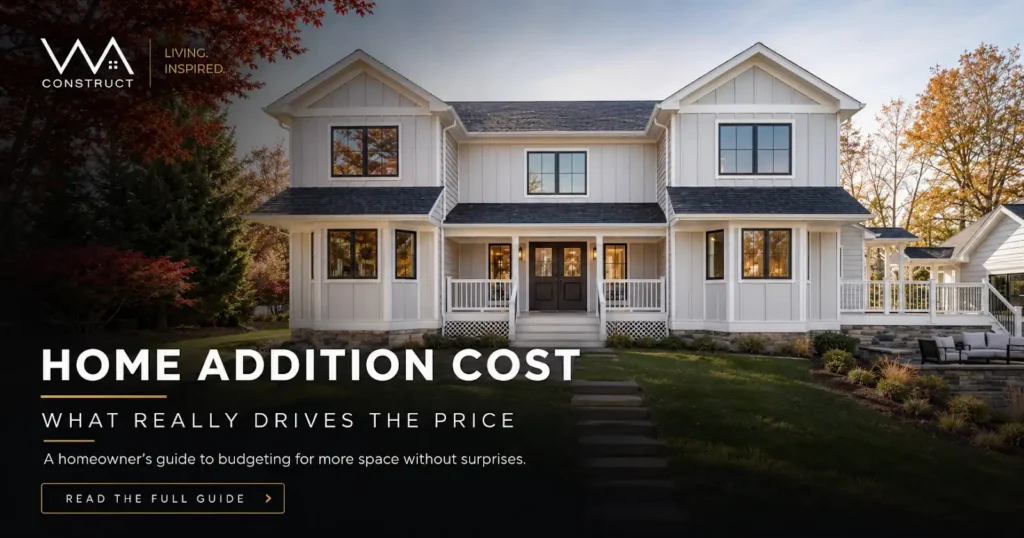
Home Addition Cost: What Actually Drives the Price (And Why Most Estimates Miss It)
You want more space, but you do not want to move. Maybe your kitchen feels too tight, your family needs another bedroom, or your home no longer supports the way you live. A home addition can solve that problem beautifully, but before you move forward, one question always comes first:
What actually impacts the home addition cost?
The answer is not as simple as square footage. In New Jersey, the cost to add a room to a house depends on the condition of your existing home, the type of addition, your town’s requirements, the design complexity, finish selections, and how clearly the project is planned before construction begins.
If you are already exploring a larger renovation or addition, working with an experienced team that understands Whole home remodeling from design through construction can help you avoid the surprises that often appear after work begins.
Why Home Addition Cost Is Not Just About Size
Many homeowners start by asking about the cost per square foot home addition. It is a reasonable question, but it rarely tells the full story.
A simple family room addition and a kitchen expansion may have similar square footage, but they are completely different projects. One may require basic framing, windows, insulation, and finishes. The other may involve plumbing, electrical upgrades, ventilation, cabinetry, stone surfaces, appliance planning, lighting design, and structural changes.
That is why the average cost of home addition projects can vary so widely. The size matters, but the complexity matters more.
If you are still deciding what kind of space makes the most sense, it helps to first explore smart ways to expand your home without moving so you can compare ideas before focusing only on price.
The Biggest Home Addition Price Factors
Every home addition has its own set of variables. Some are obvious. Others are hidden until a builder takes the time to study the home properly.
Existing Structure
Your current home plays a major role in the final scope. Before adding new space, a builder must understand:
- Foundation condition
- Framing capacity
- Roof structure
- Electrical panel capacity
- HVAC performance
- Plumbing access
- Drainage and grading
- Existing code issues
Older homes often need more investigation because previous renovations, outdated systems, or hidden structural concerns can affect the project.
This is where a quick estimate can become dangerous. If a contractor prices the addition without properly studying the home, the number may look attractive at first, but missing details can turn into change orders later.
Type of Addition
The kind of space you are adding has a major impact on the home addition cost.
A bedroom addition cost is usually influenced by framing, insulation, windows, flooring, electrical, and finish level. A kitchen addition cost is more complex because it often includes plumbing, cabinetry, countertops, appliances, lighting, ventilation, and layout coordination.
A garage addition cost depends on factors like foundation type, driveway access, storage needs, insulation, room above the garage, and whether the garage will be attached or detached.
The cost of second story addition projects is usually affected by structural reinforcement, roof removal, engineering, stair placement, temporary weather protection, and how the new level connects to the existing home.
For homeowners considering vertical expansion, understanding the planning behind 2-storey addition cost and budgeting for expansion can help clarify why these projects require more careful design and structural review.
Why Cost Per Square Foot Can Be Misleading
The cost per square foot home addition can be helpful as a rough comparison, but it should never be the only number you use to make a decision.
A larger, simpler room may have a lower cost per square foot than a smaller, highly detailed kitchen or primary suite. That does not mean the smaller project is overpriced. It means the systems, materials, and labor are more concentrated.
Spaces That Usually Carry More Complexity
Some additions require more coordination because they include mechanical systems, specialty finishes, or structural changes. These often include:
- Kitchens
- Bathrooms
- Primary suites
- Laundry rooms
- In-law suites
- Second-story additions
- Garages with living space above
- Additions tied into older homes
When comparing proposals, the better question is not only, “What is the cost per square foot?”
The better question is:
What is included, what is excluded, and what is the likely completion cost?
Home Addition Cost Breakdown: Where the Money Goes
A proper home addition cost breakdown should do more than list materials and labor. It should explain the assumptions behind the number.
A clear proposal should account for:
Design, Architecture, and Engineering
Before construction starts, your addition may require architectural drawings, structural engineering, zoning review, and design coordination. This phase helps ensure the project is buildable, code-compliant, and aligned with your goals.
Permits and Township Requirements
New Jersey towns vary widely in how they review additions. Zoning setbacks, lot coverage, stormwater rules, inspections, and energy requirements can all affect the project.
A builder with local experience can help prevent delays by preparing the right information before submission.
Site Preparation and Demolition
Before building new space, the site must be prepared. This can include demolition, excavation, protection of existing areas, temporary access, debris removal, and utility coordination.
Foundation and Structural Work
The foundation is one of the most important parts of the project. Depending on the addition, the work may include footings, crawl space, slab, basement extension, beams, posts, or reinforcement of the existing structure.
Framing, Roofing, and Exterior Tie-Ins
A home addition should not look or feel like an afterthought. The framing, roofline, siding, windows, trim, and exterior details need to connect naturally with the existing home.
Poor exterior integration can hurt curb appeal and long-term value.
Electrical, Plumbing, and HVAC
Mechanical systems are often where hidden costs appear. Your current home may not have enough capacity to support the new space. The electrical panel may need an upgrade, the HVAC system may need zoning, or plumbing lines may need to be relocated.
Interior Finishes
Flooring, cabinetry, tile, lighting, millwork, paint, fixtures, hardware, and other finishes all affect the final investment. The more selections are made before construction, the fewer surprises happen later.
Project Management and Scheduling
A well-run addition requires coordination between designers, project managers, trade partners, inspectors, vendors, and homeowners. This is where process matters. A poorly managed schedule can create stress, delays, and avoidable costs.
The Hidden Cost of Late Decisions
One of the most common reasons home addition cost changes during construction is late decision-making.
When materials are selected too late, everything becomes harder:
- Lead times become urgent
- Trades may need to be rescheduled
- Layouts may need to change
- Allowances may no longer match expectations
- Homeowners feel pressured to decide quickly
A floor is not just a floor. It affects transitions, stair details, trim, cabinetry, and the overall design language of the home.
A lighting decision is not just decorative. It affects electrical placement, ceiling layout, switching, and sometimes framing.
That is why finish selections should be part of the design process, not an afterthought during construction.
Township Rules Can Change the Scope
Two homes in neighboring towns can have very different requirements. This is one of the most overlooked home addition price factors in New Jersey.
Depending on the municipality, your project may involve:
- Zoning review
- Setback restrictions
- Lot coverage limitations
- Drainage requirements
- Tree protection rules
- Energy code requirements
- Engineering review
- Multiple inspection stages
A builder who understands the township process can help keep the project moving. A builder who is unfamiliar with the local requirements may learn those details during your project, which can create delays and frustration.
The Middle of the Project Is the Worst Time to Discover the Real Scope
By the time walls are open and trades are scheduled, every change becomes more expensive emotionally, logistically, and financially.
This is why serious planning matters before construction begins.
For example, if you are considering a garage addition, the decision is not only about adding parking. You may need to think through storage, mudroom access, ceiling height, room above the garage, exterior design, driveway flow, and future use. A detailed guide on cost and considerations of a garage addition to a house can help homeowners understand why garage projects involve more than just building a box for cars.
The same principle applies to every type of addition. The more you clarify before construction, the more control you have during construction.
Fixed-Price vs. Cost-Plus: Why Contract Type Matters
The contract structure can affect your final home addition cost just as much as the design itself.
Cost-Plus Contracts
With a cost-plus contract, the homeowner typically pays the project costs plus a builder fee. This structure may seem flexible, but it can make the final number harder to predict.
If the scope is not fully defined, the homeowner carries more risk.
Fixed-Price Contracts
With a fixed-price contract, the scope, selections, allowances, and exclusions are clarified before signing. This gives homeowners more cost certainty.
A fixed-price contract only works well when the builder has done the proper due diligence. The proposal must be detailed, realistic, and transparent.
The goal is not just to create a lower starting number. The goal is to create a number that can be trusted.
Why Detailed Proposals Protect Homeowners
A vague proposal creates confusion. A detailed proposal creates confidence.
A strong home addition proposal should include:
- Clear scope of work
- Defined allowances
- Specific exclusions
- Finish expectations
- Payment milestones
- Estimated timeline
- Permit assumptions
- Structural assumptions
- Change order process
- Communication process
When a proposal says “allowance TBD” or “standard finishes,” the homeowner may not know what is actually included.
That is where conflict begins.
A detailed proposal helps both sides understand the same project before construction starts.
Timeline Also Impacts the Real Cost
Homeowners often think of home addition cost only as the construction contract. But delays can create indirect costs too.
A delayed project may affect:
- Temporary housing
- Storage
- Family routines
- Work-from-home schedules
- School-year planning
- Hosting plans
- Daily stress
- Access to kitchens, bathrooms, or living areas
A timeline should not be a guess. It should be built around permitting, inspections, material lead times, weather, trade sequencing, and realistic construction conditions.
A builder who treats the timeline seriously can protect more than your schedule. They can protect your quality of life during the project.
How WA Construct Helps Homeowners Avoid Cost Surprises
At WA Construct, the focus is not just on the starting estimate. It is on helping homeowners understand the likely completion cost before construction begins.
Detailed Pre-Construction Discovery
WA Construct asks detailed questions early to understand how the home needs to function, not just how it should look. This helps prevent missed needs that become expensive changes later.
Structural and Site Due Diligence
Before pricing, the team studies the existing home, site conditions, structure, systems, and potential constraints. This allows the proposal to reflect reality instead of assumptions.
Clear Allowances and Exclusions
Homeowners should know what is included, what is not included, and how upgrades or credits are handled. Clarity protects the relationship and the budget.
Interior Design Support
Selections are easier when they are guided. WA Construct helps homeowners think through finishes, materials, layout decisions, and design details before construction pressure begins.
BuilderTrend Transparency
A project portal gives homeowners access to schedules, photos, documents, selections, and communication in one place. That means fewer unanswered questions and more confidence throughout the build.
Timeline Accountability
A reliable timeline requires planning, sequencing, and accountability. WA Construct’s process is designed to keep homeowners informed and projects moving with clarity.
What Homeowners Should Ask Before Signing
Before choosing a builder, ask questions that reveal how much planning has actually been done.
Ask These Questions
- What is included in the proposal?
- What is excluded?
- Are allowances clearly defined?
- What existing conditions have been reviewed?
- How are change orders handled?
- How are township requirements managed?
- Who will communicate with me during the project?
- How will I track schedule and selections?
- What happens if the timeline changes?
- Is the contract fixed-price or cost-plus?
The best builder may not give the fastest answer. They will give the clearest one.
The Real Question Is Completion Cost
The home addition cost that matters most is not the first number you hear. It is the number you can trust at the end.
A low starting estimate can feel appealing, but if the scope is incomplete, the selections are vague, or the existing conditions were not studied, that number may not protect you.
The better path is clarity.
- Clarity on structure.
- Clarity on design.
- Clarity on finishes.
- Clarity on timeline.
- Clarity on what is included.
- Clarity on what could change.
That is what turns a stressful construction project into a confident investment.
Ready to Plan Your Home Addition With Clarity?
We do not believe in rushed guesses. We believe in accurate planning.
If you are considering a home addition in New Jersey, WA Construct can help you understand the real factors that shape your project before construction begins. From design and due diligence to selections and scheduling, our process is built to reduce surprises and help you move forward with confidence.
The number that matters is not the lowest starting estimate. It is the number you can trust at completion.
Contact WA Construct to start planning your home addition the right way.
Connect with Our Trusted Experts Today — 📞 201-485-8887
Frequently Asked Questions
The biggest factors are structure, project type, township rules, finish level, mechanical systems, and how detailed the planning is before construction starts.
The average cost of home addition projects varies widely because every home has different structure, site conditions, code requirements, and design goals.
It can help as a rough comparison, but it does not show complexity. Kitchens, bathrooms, and second-story additions usually involve more systems and planning.
Room type, foundation needs, framing, HVAC, electrical work, windows, finishes, and how the new space connects to the existing home all affect the scope.
A kitchen addition usually requires plumbing, ventilation, cabinetry, appliances, lighting, and more detailed finish coordination than a bedroom.
Second-story additions often require structural reinforcement, engineering, roof modifications, stair planning, and careful weather protection during construction.
It should include design, permits, structure, foundation, framing, mechanical systems, finishes, allowances, exclusions, timeline assumptions, and project management.
Not without reviewing the scope. A lower estimate may exclude foundation details, driveway work, storage needs, insulation, exterior finishes, or future-use planning.