

Three contractors gave you three very different numbers for the same siding project.
One looks surprisingly low.
One feels uncomfortably high.
One seems reasonable… until you notice the exclusions buried in the fine print.
That is exactly why homeowners keep asking: how much does it cost to reside a house? But the smarter question is not only, “What is the price?” It is, “What is actually included, what is missing, and what could become a surprise later?”
In 2026, siding is not just an exterior upgrade. It is your home’s weather shield, insulation layer, curb appeal driver, and long-term protection system. When homeowners approach siding as part of a larger home remodeling plan, they make better decisions because they stop comparing surface-level numbers and start comparing real project value.
You are not just buying new siding. You are buying protection against water intrusion, hidden rot, poor insulation, fading materials, rushed installation, and future repairs. The siding that looks cheapest on paper can become the most expensive decision if the scope is incomplete.
Why the Average Cost to Reside in a House Can Be Misleading
Search for the average cost to reside a house, and you will find broad answers that rarely explain your actual home.
That is the problem.
Average numbers do not know your wall condition. They do not know your roofline complexity. They do not know whether your old siding is hiding moisture damage. They do not know if your windows were flashed correctly or if your existing trim needs replacement.
A siding project is not priced by siding alone. It is shaped by the full exterior system. That is why homeowners researching exterior remodeling ideas that transform how a home looks, feels, and performs should think beyond curb appeal and study how each exterior layer works together.
The real cost drivers usually include:
- Siding material and performance tier
- Condition of the sheathing behind the existing siding
- Trim, fascia, soffit, and roofline details
- Window and door flashing requirements
- Access, height, staging, and safety needs
- Permit requirements and inspection expectations
- Removal and disposal complexity
- Weather barrier upgrades
- Labor quality and installation method
This is why two homes with similar square footage can receive completely different siding estimates. The visible surface may look similar. The hidden scope may not.
And if your existing siding only needs refreshing instead of replacement, understanding exterior painting budget considerations can help you compare whether repainting, repairing, or fully residing makes better sense for your home.
The Hidden Costs Most Siding Estimates Do Not Explain
A siding proposal can look clean and simple at first glance.
Then demolition begins.
That is when the real story of the house appears. Moisture damage, soft sheathing, failed flashing, outdated insulation, poor ventilation, and old repairs can all change the project.
The best siding contractors do not pretend those risks do not exist. They help you identify them early.
Hidden Water Damage Behind Existing Siding
Old siding often fails slowly. Water enters around seams, windows, trim joints, and roofline transitions long before homeowners notice anything inside the home.
Once the old siding is removed, the crew may find:
- Soft or rotted sheathing
- Compromised wall framing
- Mold-prone wall cavities
- Failed housewrap
- Poorly sealed window openings
- Old insect or moisture damage
This is one of the biggest reasons a low estimate becomes a stressful project. If the proposal does not clearly explain how hidden damage will be handled, the homeowner is left exposed.
Weather Barrier and Flashing Upgrades
Siding is only one part of the protection system.
Behind it, your home needs a properly installed weather-resistant barrier, drainage plane, flashing tape, window detailing, and penetration sealing. These layers are what move water away from the structure.
When crews skip this step, the siding may look beautiful from the street but fail behind the surface.
A proper scope should explain how the contractor will manage:
- Window and door flashing
- Housewrap or weather barrier installation
- Sill pan details
- Wall penetrations
- Deck and roofline transitions
- Utility openings
- Vent and fixture sealing
The finish gets attention.
The flashing protects the home.
Trim, Fascia, Soffit, and Roofline Coordination
Siding does not stop in isolation. It meets trim, rooflines, gutters, soffits, fascia, windows, doors, decks, and exterior fixtures.
If these connections are not planned, the final result can look patched together.
A stronger siding plan considers:
- Whether the trim should be replaced or wrapped
- Whether the soffit ventilation is adequate
- Whether the fascia boards are damaged
- Whether gutters need temporary removal
- Whether roof edges affect siding termination
- Whether decorative trim should be preserved or simplified
This is where premium exterior work separates itself. It does not just cover the house. It resolves the transitions.
Material Selection in 2026: Do Not Compare Labels, Compare Performance
Many homeowners ask about the cost to reside house with vinyl siding or the cost to reside in a house with wood siding, but material names alone do not tell the full story.
There is basic vinyl and premium insulated vinyl.
There is natural wood and engineered wood.
There is fiber cement installed correctly, and fiber cement installed poorly.
The material matters, but the product tier and installation quality matter just as much.
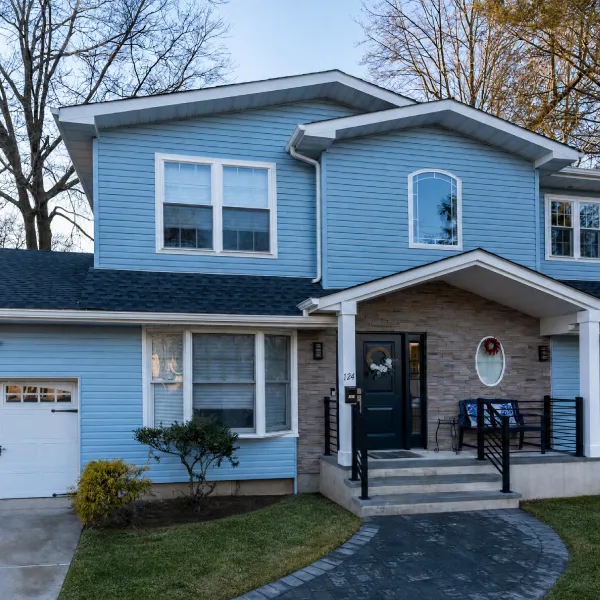
For WA Construct-style exterior projects, siding decisions are usually viewed through the lens of performance, durability, exterior design, and long-term value. The goal is not to choose the most expensive material. The goal is to choose the material that fits the home, the neighborhood, the maintenance expectations, and the full exterior plan.
Vinyl Siding
Vinyl siding remains popular because it can be practical, versatile, and lower maintenance compared to some traditional options.
But not all vinyl performs the same.
Premium vinyl products can offer better color retention, improved impact resistance, stronger profiles, and insulation-backed systems. Lower-grade vinyl may be more vulnerable to warping, fading, cracking, and poor long-term appearance.
Best fit:
- Homeowners who want lower maintenance
- Families looking for practical exterior protection
- Projects where clean curb appeal matters
- Homes needing a balanced performance solution
Watch for:
- Thin panels
- Weak fastening
- Poor trim details
- Incomplete flashing
- Cheap-looking profiles
- Heat-related distortion
Fiber Cement Siding
Fiber cement is known for strength, fire resistance, insect resistance, and strong curb appeal. It can deliver a premium look when installed properly.
The key phrase is installed properly.
Fiber cement requires careful cutting, fastening, spacing, caulking, flashing, and moisture management. Poor installation can shorten performance and create warranty issues.
Best fit:
- Homeowners who want durability
- Premium exterior transformations
- Homes with architectural detail
- Neighborhoods where curb appeal and material quality matter
Watch for:
- Improper clearances
- Bad joint flashing
- Overdriven fasteners
- Poor paint or finish handling
- Inexperienced installers
Engineered Wood Siding
Engineered wood gives homeowners the warmth of wood with stronger resistance to common natural wood issues. It can create a refined exterior with more design flexibility than many homeowners expect.
Still, it needs disciplined installation. Water management at joints, edges, and penetrations is critical.
Best fit:
- Homeowners who want a natural wood-inspired look
- Modern farmhouse and transitional exteriors
- Projects where texture and warmth matter
- Homes needing strong design character
Watch for:
- Poorly sealed cuts
- Incorrect fasteners
- Weak joint treatment
- Inadequate drainage details
Natural Wood Siding
Natural wood is beautiful. It has warmth, depth, and character that synthetic products try to imitate.
But wood requires commitment.
If you choose natural wood, you are also choosing regular maintenance, periodic refinishing, and ongoing inspection. When maintained well, it can look exceptional. When ignored, it can fail faster than expected.
Best fit:
- High-character homes
- Historic or architecturally sensitive properties
- Homeowners who value natural materials
- Projects where authenticity matters
Watch for:
- Moisture exposure
- Paint or stain neglect
- Insect damage
- Poor ventilation
- High-maintenance expectations
Siding Replacement Cost Per Square Foot: Why This Metric Can Mislead You
Many homeowners compare siding replacement cost per square foot because it feels easy.
But easy is not always accurate.
Square-foot pricing does not capture the parts of siding work that make or break the project. It can hide complexity, especially on homes with multiple rooflines, dormers, bay windows, custom trim, stone transitions, porches, decks, or old siding layers.
A square-foot estimate may not reflect:
- Wall height
- Access difficulty
- Trim complexity
- Tear-off requirements
- Disposal volume
- Hidden repairs
- Permit needs
- Material waste
- Flashing details
- Crew skill level
That is why a complete estimate should not rely on a simple formula. It should explain the scope behind the number.
The better question is not, “What is the siding replacement cost per square foot?”
The better question is, “What does that number actually include?”
Why Does Labor Cost to Reside a House Vary So Much
The labor cost to reside a house can vary dramatically because labor is not just about time. It is skill, sequencing, protection, cleanup, access, safety, and detail management.
A simple wall with easy access is one thing. A multi-story home with dormers, trim returns, uneven walls, exterior fixtures, window surrounds, and roofline transitions is another.
Labor increases when a home requires:
- Scaffold or lift access
- Multi-story staging
- Careful removal of old siding
- Detailed trim carpentry
- Flashing reconstruction
- Sheathing repairs
- Custom profiles
- Historic detail preservation
- Multiple material transitions
- Tight site logistics
This is where the cheapest way to reside a house can become risky. A low labor number may mean the contractor is assuming a simple project, rushing details, using less experienced crews, or planning to charge later for anything that falls outside the narrow estimate.
Cheap is not always cheap.
Sometimes it is just incomplete.
Cost to Reside House DIY: Where Homeowners Get Trapped
The cost to reside house DIY may look attractive at first.
You remove labor from the equation, buy the material, rent the tools, and assume you are saving money.
But whole-house siding is not a weekend project. It is a building envelope project. Mistakes do not just affect appearance; they can create water intrusion, warranty issues, failed inspections, and future wall damage.
DIY siding can become risky because of:
- Incorrect flashing around windows and doors
- Poor housewrap installation
- Bad overlap direction
- Improper fastening
- Expansion and contraction mistakes
- Uneven panel alignment
- Unsafe ladder or scaffold work
- Higher material waste
- No workmanship warranty
- Missed hidden damage
DIY may make sense for small repairs, accent areas, or minor detached structures. But for a full home exterior, the risk is often bigger than the savings.
When water gets behind new siding, it does not announce itself immediately.
It waits.
Then it becomes expensive.
Exterior Siding Cost Comparison: What Smart Homeowners Should Actually Compare
A good exterior siding cost comparison should not only compare materials. It should compare long-term ownership.
The right comparison looks at:
- Maintenance frequency
- Expected lifespan
- Warranty strength
- Energy performance
- Repair difficulty
- Color retention
- Impact resistance
- Fire resistance
- Moisture protection
- Resale perception
- Installation complexity
This is the middle point where many exterior decisions overlap. If siding, roofing, gutters, fascia, and flashing all connect physically, they should be evaluated together. Homeowners comparing siding options should also understand how a roof replacement affects exterior planning, especially when reviewing new roof cost expectations for homeowners before coordinating larger exterior improvements.
The strongest siding decision is not always the cheapest material. It is the option that fits your home, your maintenance tolerance, your climate exposure, your neighborhood, and your long-term plan.
Cost to Reside a Brick House: Why It Is a Different Conversation
The cost to reside a brick house is not the same as replacing siding on a typical framed exterior.
Brick changes everything.
You may be covering existing brick, working around brick accents, replacing non-brick siding areas, or adding veneer. Each path requires different planning.
For WA Construct-level exterior planning, brick-related siding work is usually treated as a more detailed exterior design and construction conversation. Covering brick, tying siding into masonry, or adding stone and brick veneer requires careful coordination because brick affects attachment, drainage, wall depth, window returns, moisture movement, and design balance.
Covering Existing Brick
Installing siding over brick usually requires a furring system, proper ventilation, moisture planning, and careful treatment around windows and doors.
This is not simply “put siding over brick.” It is building a new exterior layer over an existing masonry surface.
Key concerns include:
- Wall thickness changes
- Window return depth
- Door trim transitions
- Moisture movement
- Attachment methods
- Drainage space
- Ventilation behind the new cladding
Updating Partial Brick Exteriors
Many homes have brick fronts with siding on the sides and rear. In these cases, the goal is often to modernize the full exterior while keeping the brick as a design feature.
This requires coordination between:
- Siding installers
- Trim carpenters
- Masonry specialists
- Window contractors
- Roofing or gutter crews
The best result looks intentional, not patched.
Brick or Stone Veneer Additions
Adding brick or stone veneer can create a premium exterior, but it requires structural and moisture planning. Veneer has weight, drainage, and attachment requirements that must be handled correctly.
It can elevate the home beautifully, but only when the technical plan supports the design.
The Timeline Nobody Explains Clearly
Siding installation may look quick from the outside, but the full project timeline includes more than the days when crews are physically installing siding.
A real timeline may include:
- Initial site review
- Scope documentation
- Material selection
- Proposal review
- Permit preparation
- Material ordering
- Weather scheduling
- Existing siding removal
- Sheathing inspection
- Repairs and flashing
- New siding installation
- Trim and detail work
- Final cleanup
- Punch-list review
- Final inspection if required
This is why a contractor who promises speed without explaining the sequence may be skipping the most important part: planning.
Fast work is only valuable when the details are right.
What Drives the Project Scope Up?
Some scope increases are legitimate. Others are avoidable. Knowing the difference protects your budget and your confidence.
Legitimate Scope Drivers
These items may increase the project scope because they protect the home:
- Rotted sheathing
- Failed flashing
- Water-damaged framing
- Unsafe access conditions
- Multi-layer siding removal
- Complex trim reconstruction
- Code-required updates
- Moisture barrier upgrades
- Window and door integration
- Historic or custom detail preservation
These are not “extras.” They are the work required to do the project correctly.
Scope Items to Question
You should ask for clarification if you see vague or unexplained charges related to:
- General “miscellaneous” categories
- Undefined trim allowances
- Unclear disposal fees
- Broad repair contingencies
- Undefined material upgrades
- Unlisted permit responsibilities
- No explanation of flashing or weather barrier work
A professional proposal should reduce confusion, not create it.
Questions to Ask Before Choosing a Siding Contractor
Before signing a siding contract, ask questions that reveal whether the contractor understands the full exterior system.
Ask These Before You Commit
- What is included in the siding scope?
- What is excluded?
- How will hidden damage be handled?
- Will old siding be removed or covered?
- What weather barrier system will be used?
- How will windows and doors be flashed?
- Are trim, fascia, and soffits included?
- Who handles permits if required?
- What happens if sheathing damage is discovered?
- How is cleanup handled?
- What warranties apply to material and labor?
- Who is managing the project day to day?
The answers matter.
But the way the contractor answers matters even more.
A strong contractor explains the process clearly. A weak one rushes you back to the price.
How WA Construct Helps Homeowners Avoid Siding Project Surprises
WA Construct approaches exterior remodeling with planning first.
That matters because siding projects are not just about changing the visible finish. They are about understanding the condition of the home, the performance of the exterior envelope, the connection points, and the long-term expectations.
For homeowners, that means more clarity before construction begins.
A stronger process usually includes:
- Reviewing the existing exterior condition
- Identifying visible risk areas
- Discussing material options and maintenance expectations
- Clarifying what is included and excluded
- Coordinating siding with trim, gutters, roofing, and openings
- Setting realistic expectations before work starts
- Explaining how unexpected conditions will be handled
Before homeowners compare bids, they need to compare the plan behind the bid.
A better exterior starts before installation.
It starts with clarity.
Final Thoughts: The Real Cost Is Not Just the Siding
So, how much does it cost to reside a house?
The honest answer is: it depends on what your home needs, what your exterior system requires, what level of material makes sense, and how complete the contractor’s scope really is.
The better question is not just about the starting number.
It is about the finished result.
Will the siding protect the home?
Will the flashing be done correctly?
Will the trim transitions look intentional?
Will the material match the architecture?
Will the proposal explain the real scope?
Will you know what happens if hidden damage appears?
That is where value lives.
A siding project should not feel like a gamble. It should feel like a planned exterior improvement with clear expectations, strong documentation, and a contractor who understands that the most important work often happens behind the surface.
Planning to reside your home in New Jersey? Schedule a consultation with WA Construct to review your exterior condition, siding material options, hidden repair risks, project scope, and timeline before making a decision. With the right plan in place, your siding project can move forward with clarity, confidence, and fewer surprises.