
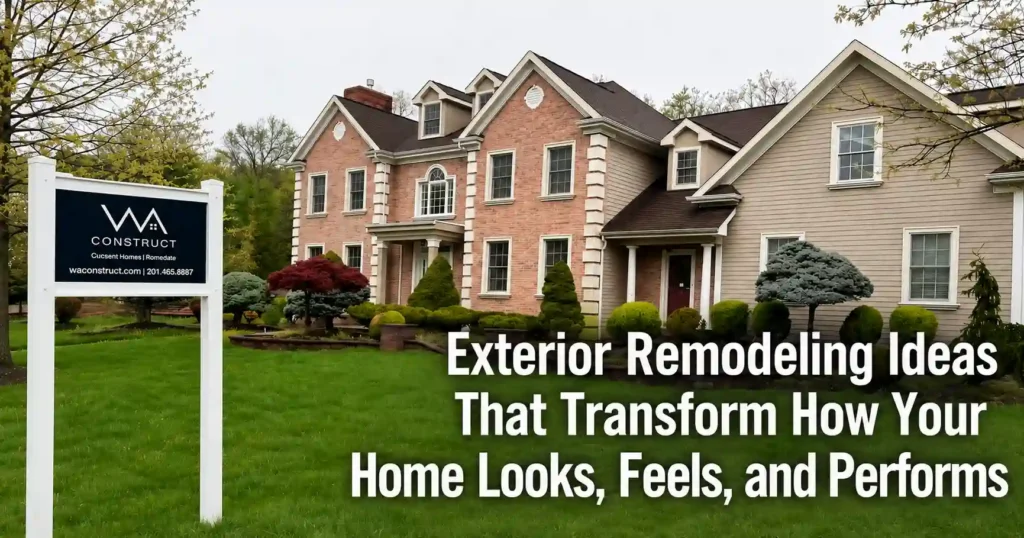
Your home’s exterior is more than siding, paint, windows, and roofing.
It is the first impression.
The daily welcome home.
The part of your property that speaks before anyone steps inside.
A well-designed exterior does not just look attractive from the street. It changes how the home feels, how it performs, how it ages, and how confidently it presents itself in the neighborhood.
But many homeowners begin exterior remodeling in the wrong place.
They start with color swatches before studying the architecture. They save inspiration photos before reviewing the existing structure. They choose materials before thinking about moisture, proportion, light, maintenance, energy performance, and how every exterior detail will work together.
That is where exterior projects start to lose direction.
A beautiful siding color can fall flat if the trim profile is wrong. A modern window can look out of place if the roofline still feels dated. A bold paint color can overpower the home if the stone, brick, landscaping, lighting, and entry details are not part of the same visual story.
Exterior remodeling is not just about making an old home look newer.
It is about making the home feel complete.
For homeowners planning a serious transformation, the smartest starting point is not a product catalog. It is a clear home remodeling planning process that connects design, structure, material selection, sequencing, and execution before construction begins.
That is the difference between an exterior that looks updated and an exterior that feels intentionally designed.
Why Exterior Remodeling Is More Than a Curb Appeal Project
Curb appeal is the obvious benefit.
Fresh siding improves the look. New windows sharpen the facade. Updated paint can change the entire mood of a home. A redesigned entry can make the property feel more welcoming before the door even opens.
But strong exterior remodeling goes deeper than appearance.
Your exterior protects the home from rain, wind, UV exposure, moisture, temperature changes, and daily wear. It affects how comfortable rooms feel, how often the home needs maintenance, how well materials age, and whether the property feels visually balanced from every angle.
The best exterior remodeling ideas answer three questions at once.
- How should the home look?
- How should the home perform?
- How should the home feel to live in?
That is where real transformation happens.
A home with properly selected siding, coordinated windows, thoughtful roofing, balanced paint colors, clean trim, and intentional lighting does not just look “renovated.” It feels composed. It feels cared for. It feels like every decision belongs.
Many exterior projects fall short because they treat siding, roofing, windows, paint, and outdoor features as separate upgrades. In reality, they are connected. One weak decision can disrupt the entire exterior.
A smart exterior remodel is not a collection of improvements.
It is a coordinated design system.
Exterior Remodeling Ideas That Create the Biggest Transformation
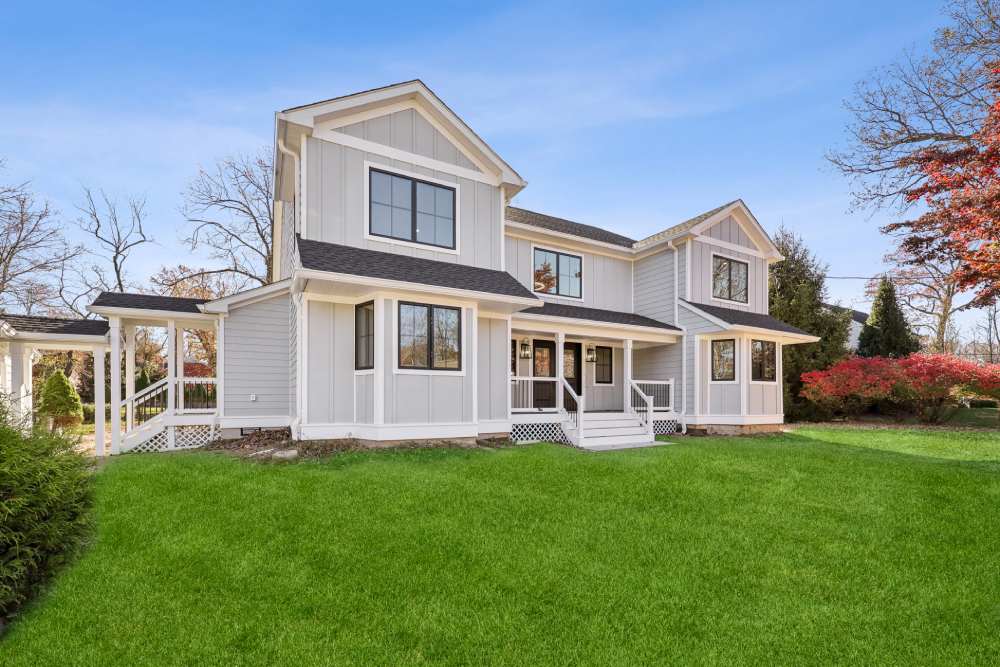
Not every exterior update carries the same visual weight.
Some changes refresh a home. Others redefine it.
The goal is not to chase every trend or copy a photo from someone else’s house. The goal is to understand which changes will create the greatest improvement for your home’s architecture, condition, comfort, and long-term performance.
The most successful exterior transformations usually come from the same major categories: siding, roofing, windows, paint, trim, entry details, lighting, landscaping, and clear exterior renovation cost planning. When these elements are reviewed together, the home stops feeling patched together and starts feeling designed.
Siding That Redefines the Home’s Character
Siding is one of the largest visual surfaces on a home, which means it does more than cover the exterior. It sets the tone for the entire property.
If the siding feels faded, flat, dated, or disconnected from the architecture, the whole home can feel tired even if the roof, windows, and landscaping are in good condition.
A strong siding plan looks beyond color. It considers the home’s architectural style, siding direction, texture, trim depth, shadow lines, window framing, masonry accents, and how the material will age over time.
This is why siding should never be selected from a small sample alone.
The same siding material can feel traditional, coastal, farmhouse, transitional, or modern depending on the profile, reveal, color, and trim relationship. Fiber cement can create a clean and timeless look. Engineered wood can add warmth and texture. Board-and-batten can bring height and dimension. Mixed siding profiles can help large elevations feel more balanced.
But the key is restraint.
Too many materials can make a home feel busy. Too little contrast can make it feel flat. The strongest exteriors usually sit in the middle: enough detail to feel custom, enough discipline to feel timeless.
Siding also tends to raise one of the first practical planning questions homeowners ask: how much does it cost to reside a house? The answer depends on more than square footage. Material type, existing exterior condition, trim details, removal needs, installation complexity, and architectural style all influence how the project should be planned.
Roofing That Supports Both Style and Protection
A roof is not just the top of the house.
It is one of the largest visual planes on the exterior.
The roofline affects proportion. The roof color affects contrast. The roof material affects character. The roof profile influences whether the home feels traditional, modern, rustic, transitional, or refined.
Many homeowners only think about the roof when it needs attention. But from a design perspective, the roof quietly controls the entire exterior composition.
A dark roof can create a grounded, dramatic look. A lighter roof can soften the home. Architectural shingles can add depth. Metal roofing can create crisp, clean lines. Slate or tile can bring a more timeless, estate-like presence.
The smartest roofing decisions consider both performance and design. The roof should be coordinated with siding, trim, gutters, windows, masonry, and paint so the home feels unified from every angle.
This is especially true in regions where heat, storms, humidity, and weather exposure play a major role in material decisions. That is why a topic like new roof cost in New Jersey is not just about numbers; it helps homeowners understand how climate, material type, roof pitch, underlayment, ventilation, and installation details affect roof planning.
Exterior Renovation Cost Planning That Keeps the Project Realistic
A strong exterior remodel is not only about choosing the right siding, roof, windows, trim, or paint.
It is also about understanding how those decisions affect the final budget.
Many homeowners start exterior remodeling with one isolated upgrade in mind. Maybe the roof needs attention. Maybe the siding looks worn. Maybe the windows feel outdated. But once the project is studied properly, the exterior often reveals connected needs: trim repairs, flashing details, gutters, structural tie-ins, window transitions, drainage concerns, or material sequencing that affects how the whole project should be priced.
That is why exterior renovation cost in New Jersey should never be treated as a quick number pulled from square footage alone.
The final budget depends on scope, material quality, existing home condition, labor complexity, access, permits, demolition, repairs, and how many exterior systems are being updated at once. A simple refresh may focus on paint, trim, and minor repairs. A deeper renovation may involve siding, windows, roofing coordination, entry updates, structural corrections, and upgraded exterior details.
The smartest homeowners do not just ask, “What will this one item cost?”
They ask, “What is the complete exterior scope, and how do we sequence it so we do not pay twice?”
That question matters.
If windows are replaced after siding, trim work may need to be reopened. If gutters are installed before fascia repairs, work may need to be undone. If paint is completed before exterior repairs are fully addressed, the finish may not last. If roofing and siding are planned separately, flashing and transition details can become more complicated than necessary.
A realistic exterior renovation budget looks at the home as one connected envelope.
Roofing protects from above. Siding protects the walls. Windows control light, comfort, and energy performance. Trim defines the architecture. Paint brings the palette together. Gutters and drainage move water away from the structure. When these elements are planned together, the budget becomes clearer, the sequence becomes cleaner, and the final result feels more intentional.
Exterior renovation cost planning is not about making the project bigger.
It is about making the project smarter.
It helps homeowners decide what should be handled now, what can wait, and what must be coordinated to avoid rework, delays, and surprise change orders later.
Exterior Paint Color Trends That Change the Entire Mood
Paint is one of the fastest ways to change how a home feels.
But exterior paint is also one of the easiest places to make a mistake.
A color that looks beautiful online can look too cold in shade. A white that feels crisp on a sample can feel harsh in direct sunlight. A dark color can look elegant on one home and heavy on another. A trendy color can age quickly if it fights the architecture.
That is why exterior paint should be selected in context, not in isolation.
The strongest exterior paint color trends today lean toward depth, warmth, and architectural balance. Warm whites are replacing stark whites. Greige and taupe tones are creating softer sophistication. Charcoal, navy, forest green, and muted earth tones are giving homes more character without making them feel loud.
The best paint schemes do not scream for attention.
They create harmony.
They make the windows feel intentional. They make the trim feel sharper. They make the landscaping feel richer. They make the architecture feel more confident.
Before choosing exterior paint, homeowners should test colors on multiple sides of the home. Morning light, afternoon light, shade, landscaping, roof color, and masonry can all change how the color reads.
Paint planning is also where preparation matters just as much as color. Homeowners researching the cost to paint the exterior of a house should look beyond paint gallons and think about surface condition, scraping, washing, priming, caulking, trim repair, application method, and finish durability.
Replacement Windows That Improve Light, Style, and Comfort
Windows are one of the most powerful design elements in a home.
They create rhythm across the facade. They control natural light. They frame views from inside. They influence comfort, ventilation, and exterior character.
Poorly sized or outdated windows can make a home feel older than it is. The wrong window style can disrupt the architecture. A window replacement that ignores trim depth, siding transitions, and exterior proportions can create a finished look that feels slightly off, even when the product itself is high quality.
That is why window planning should include more than glass and frame material.
It should consider window proportions, grid patterns, frame color, trim relationship, placement across the elevation, interior views, exterior rhythm, and how the new windows integrate with siding and weather barriers.
Black-framed windows can create bold modern contrast. Divided-light windows can support traditional charm. Large picture windows can open views and create focal points. Casement windows can improve ventilation and clean sightlines.
The right windows do not just replace what was there.
They improve the way the home looks and lives.
When homeowners compare window styles, materials, and installation methods, the cost of replacement windows becomes part of a bigger conversation. Frame material, glass performance, size, custom shapes, installation conditions, and trim integration all influence what kind of window solution makes sense for the home.
Best Materials for Exterior Remodel Projects
The best materials for exterior remodel projects are not just beautiful.
They are appropriate.
Appropriate for the home. Appropriate for the climate. Appropriate for the architecture. Appropriate for the homeowner’s maintenance expectations. Appropriate for how the exterior should perform years after installation.
A material can be premium and still be wrong for the home. Another material can be simple and perform beautifully when used in the right place.
That is why material selection should always begin with a bigger question:
What should this home become?
Fiber cement works well for homeowners who want a classic siding appearance with strong durability and lower maintenance than natural wood. It can support traditional, transitional, modern farmhouse, and coastal-inspired homes, depending on profile and color.
Engineered wood brings warmth, texture, and a more natural visual character. It works well when the goal is to create a softer, more organic exterior without relying fully on traditional wood maintenance.
Natural wood has a warmth that manufactured materials often try to imitate. It works beautifully for accents, soffits, porch ceilings, modern exterior details, and homes where authentic texture matters. The key is using it intentionally, not everywhere.
Metal can bring a refined contemporary edge. It works well on roof details, awnings, trim accents, vertical siding sections, gutters, and modern transitions. Used with restraint, it adds sharpness and sophistication.
Stone and brick give an exterior weight, permanence, and texture. They are especially effective around foundations, chimneys, entryways, columns, and accent walls. The most important decision is proportion. Stone should feel integrated, not pasted on.
Composite trim provides clean lines and durability while helping define windows, corners, doors, fascia, and transitions. Trim is not a small detail. It is the frame around the entire exterior.
A polished exterior often comes down to how well these materials are combined. The material itself matters, but the relationship between materials matters even more.
Exterior Design Inspiration: How to Create a Cohesive Look
Exterior design inspiration is everywhere.
Pinterest. Instagram. Houzz. Portfolio pages. Neighborhood drives. Before-and-after photos.
But inspiration can become confusing fast.
One home has black windows. Another has white siding. Another has stone columns. Another has dark trim. Another has a modern garage door. Another has copper gutters.
The problem is not having too many ideas.
The problem is not knowing which ideas belong together.
A strong exterior renovation before and after does not happen because every trendy element was added. It happens because the design has hierarchy.
Something leads. Something supports. Something adds contrast. Something stays quiet.
That is what makes a home feel designed.
Every home has an architectural language. Colonial homes have symmetry and order. Craftsman homes have warmth and detail. Ranches need proportion and horizontal balance. Modern homes depend on clean lines and restraint. Farmhouse-inspired homes need simplicity, contrast, and texture.
Before changing the exterior, identify what the home already wants to be. Then improve that direction.
Contrast should also be used carefully. Light siding with dark windows can feel sharp. Dark siding with warm wood can feel rich. Stone against smooth panels can add depth. But too much contrast creates visual noise, while too little contrast creates a flat exterior.
Roof, siding, and trim should never be selected separately. They form the main visual triangle of the home. If the roof is dark, the siding and trim need to balance that weight. If the siding is bold, the trim may need to stay quieter. If the trim is highly contrasted, the rest of the palette should feel controlled.
Exterior colors should also be studied in real light. A warm white can glow in morning light and look yellow in the afternoon. A deep gray can look rich in the sun and almost black in the shade. A green can feel elegant near natural landscaping but heavy on a flat facade.
Lighting and landscaping complete the exterior. Lighting creates evening presence, safety, and mood. Landscaping softens edges, frames entries, and brings scale to the home. Walkways, planters, and exterior fixtures create the final layer of polish.
A home can have beautiful materials and still feel incomplete without these finishing details.
DIY Exterior Remodeling Projects vs. Professional Work
There is a place for DIY exterior remodeling projects.
Small updates can make a real difference when done carefully. Updating house numbers, replacing a mailbox, adding planters, refreshing small landscaping beds, cleaning walkways, or improving simple outdoor lighting can make a home feel more cared for without changing the structure.
These details sharpen the exterior.
But exterior work becomes risky when it affects weather protection, structure, or long-term performance.
Full siding replacement, window installation, roofing, flashing details, structural exterior changes, drainage-related work, sunroom additions, porch modifications, and any work involving permits should be handled professionally.
The reason is simple.
Exterior mistakes do not always show up immediately.
Poor flashing may look fine for months before moisture appears. Improper window installation may not reveal itself until the first major storm. Bad siding installation may quietly trap moisture behind the wall. A roofing detail may fail long after the crew is gone.
Exterior remodeling is not just about what you see on day one.
It is about what still performs years later.
Exterior Remodeling Checklist Before You Start
A strong exterior remodel starts before any material is ordered.
The planning phase is where regret is prevented.
Begin by studying the existing home from every angle: the street, driveway, backyard, and side elevations. Look for what feels dated, what feels unbalanced, what feels disconnected, what should be preserved, and what should be simplified.
Then move from appearance to performance. Drafty windows, failing siding, water stains, peeling paint, soft trim, poor drainage, roof wear, cracked masonry, and uneven exterior transitions all deserve attention before cosmetic selections begin.
A beautiful exterior built over unresolved problems is not a transformation.
It is a cover-up.
Once the condition of the home is clear, choose a design direction. The goal might be classic and timeless, modern and clean, warm and transitional, farmhouse-inspired, coastal and light, estate-like and refined, or natural and organic. Whatever the direction, it should be clear before materials are selected.
Next, review the full exterior palette together. Siding, trim, windows, roofing, stone, paint, gutters, lighting, and doors should not be selected one by one. Exterior design works best when the full composition is visible at the same time.
Homeowners should also review local requirements before moving too far into planning. Township approvals, HOA guidelines, historic district rules, material restrictions, and setback considerations can all influence what is possible.
Maintenance should be considered honestly as well. Every material has a personality. Some require regular painting. Some need cleaning. Some age naturally. Some resist moisture better. Some look best when detailed carefully. The right material is not only the one that looks best today. It is the one that fits how the homeowner wants to live in the home over time.
Finally, confirm the project sequence. Windows may need to happen before siding. Siding may need to coordinate with trim. Roofing may affect gutters and fascia. Paint may come after repairs. Lighting may need electrical planning before finishes are complete.
The right sequence protects the final result.
The wrong sequence creates rework.
Common Exterior Remodeling Mistakes to Avoid
Many exterior remodels do not fail because homeowners choose bad materials.
They fail because the decisions were not connected.
One of the most common mistakes is choosing a style before studying the home. A modern farmhouse image may look beautiful online, but if the home’s structure, roofline, windows, and proportions do not support that style, the finished result can feel forced. The better approach is to start with the home’s existing architecture and improve it before trying to reinvent it.
Another mistake is mixing too many materials. Stone, brick, vertical siding, horizontal siding, metal, wood, black trim, white trim, bold doors, and decorative shutters can quickly become too much when used together without discipline. A stronger approach is to choose a primary material, a supporting material, and one or two accents. Let the design breathe.
Homeowners also overlook moisture and drainage too often. Exterior beauty means very little if water is not managed correctly. Flashing, house wrap, gutters, grading, trim details, and drainage all matter. The parts behind the wall often determine how long the visible parts last.
Paint is another area where rushed decisions create regret. A color that feels perfect on a screen may look completely different at home. Large samples should be tested on different elevations and viewed at different times of day.
Window planning is another common weak point. Windows affect more than light. They affect trim depth, siding transitions, interior comfort, exterior rhythm, and architectural style. They should be planned together with siding, trim, and paint so they feel integrated, not inserted.
The entry should not be forgotten either. The front door, lighting, walkway, porch, and surrounding details form the emotional center of the exterior. If the entry feels underwhelming, the whole home can feel unfinished.
The biggest mistake of all is starting without a complete plan. Exterior remodeling has too many connected parts to rely on scattered decisions. Materials, colors, sequencing, permits, design direction, and responsibilities should be clear before work begins.
How WA Construct Helps Homeowners Approach Exterior Remodeling With Clarity
At WA Construct, exterior remodeling starts before selections are made.
The first step is understanding the home.
Not just what the homeowner wants to change, but why the exterior feels dated, where the structure needs attention, how the materials relate to one another, and what design direction will create the strongest result.
Siding, windows, roofing, trim, paint, lighting, doors, and outdoor features are not treated as separate decisions. They are reviewed as one connected system.
That matters because most exterior regrets come from fragmented planning.
A homeowner chooses windows without considering trim. Then chooses siding without studying the roof color. Then choose paint without testing the light. Then adds stone without checking the proportion. Each choice may be good on its own, but the final exterior still feels disconnected.
WA Construct’s design-build approach helps prevent that.
The goal is clarity before construction.
Clear scope. Clear selections. Clear sequence. Clear communication. Clear expectations.
That is what turns exterior remodeling from a stressful guessing process into a guided transformation.
The result is not just a better-looking home. It is a home exterior that feels cohesive, performs better, and reflects decisions made with purpose.
Conclusion: A Better Exterior Starts With a Better Plan
A successful exterior remodel is not about chasing the loudest trend. It is about making the right decisions in the right order.
Study the home first. Understand the architecture. Review the condition. Coordinate the materials. Test the colors. Plan the sequence. Then build with clarity.
That is how an exterior moves from updated to transformed.
The best exterior remodeling ideas do more than improve curb appeal. They make the home feel more balanced, more comfortable, more durable, and more personal. A great exterior does not just look good from the street. It feels right every time you come home.
Planning an exterior remodel in New Jersey? Schedule a conversation with WA Construct to review your home’s current condition, design direction, material options, and long-term performance needs before making selections. With practical planning and design-build clarity, your exterior ideas can become a buildable plan instead of a scattered list of upgrades.