
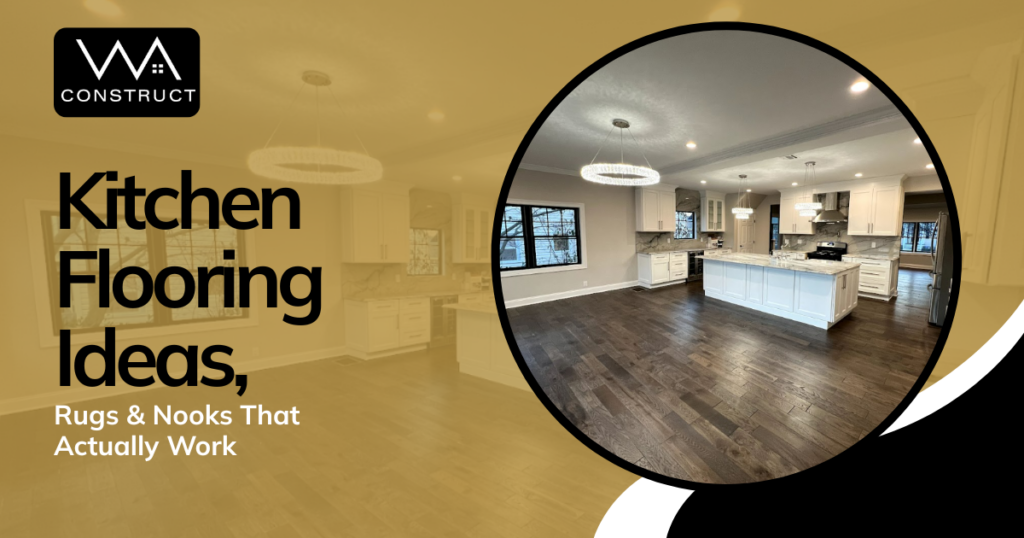
Kitchen Flooring That Actually Works: What 19 Years of Renovations Taught Us
Too many homeowners pick the wrong kitchen floor. They find stunning kitchen flooring ideas that look great in photos but fail in real life.
They walk into stores and scroll through designs. They choose based on looks. Not on how well the floor works when your family uses it every day for years.
After 19 years of kitchen projects in North and Central New Jersey, we’ve learned something important. Finding the best flooring for kitchens isn’t about style. It’s about whether your kitchen works well or causes problems.
It’s one of the foundational decisions inside 12 Kitchen Remodeling Ideas & Designs to Transform Your Home because materials influence comfort, durability, and long-term satisfaction.
The Performance Metrics Nobody Talks About
When clients show us their photos, we ask different questions.
How many people cook here daily? Do you have kids under 10? Pets? Do you wear shoes inside? How often do you deep-clean?
These aren’t just small talk. They help us predict what will work.
That beautiful wide-plank hardwood? Looks amazing in stores. But wood swells and warps when it gets wet. It dents when you drop heavy pots. You’ll need to sand and reseal it over time.
The trendy concrete floors? Great for Instagram. Bad for your back if you stand cooking for long periods.
We rank materials by three things most people never think about when looking at kitchen flooring ideas: how well it handles impacts, how comfortable it feels to stand on, and how easy it really is to maintain. Not what companies claim but what real families experience after living with these floors for years.
The Flooring Hierarchy That Actually Matters
Luxury vinyl plank is our top pick for most projects when people ask about the best flooring for kitchens.
Clients push back at first because it doesn’t sound fancy. But we’ve put it in expensive kitchens where it beats floors that cost much more. It’s waterproof, comfortable, and tough, and when done right, it looks just like real hardwood.
The lifespan? 15-20 years of reliable performance.
Porcelain tile ranks second. We use large tiles with thin grout lines. We’re talking 24×48 or 48×48 sizes that look luxurious without the cleaning hassle of tiny tiles.
Nothing beats how long these tiles last. They can go for decades. But we only suggest them for people who are okay standing on hard surfaces. Some clients love the look but hate how it feels months later.
Engineered hardwood works great in kitchens used more for hanging out than heavy cooking. If you reheat more than you cook, it’s fine. If you cook a lot, we’ll steer you away from it.
Modern Kitchen Flooring Trends Worth Following
The flooring world is moving away from cold, plain looks.
Gray floors were popular for years. Now they’re falling out of style. Homeowners want warmer colors now, like beiges, medium browns, and rich chocolates that make kitchens feel cozy instead of cold.
Another trend fits with modern kitchen flooring trends: planks that are longer and wider than normal. These bigger sizes create a high-end look and show off grain patterns better.
But here’s what matters more than trends: how well it works is just as important as how it looks. Kitchens do many jobs now, like cooking, working, gathering, and entertaining. Your floor needs to handle all of it.
Kitchen Rugs: The Protection Strategy Most Designers Get Wrong
Most homeowners think of kitchen rugs as extras. Something to match colors or add decoration.
Kitchen rugs are like insurance for your floor. When placed right, they protect your floor from wear in busy spots. When chosen wrong, they become slipping dangers that collect grease and need more care than the floor.
We place rugs in the three busiest zones: in front of the sink, in front of the stove, and in the prep area between them.
But picking the right material matters more than where you put it.
The Material Hierarchy for Kitchen Rug Ideas
Polypropylene and nylon blends are what we use for practical kitchen rug ideas. Here’s why: they’re almost impossible to destroy in kitchens. They resist water and stains. They wash in machines. We’ve seen these rugs handle years of daily cooking and still look new after washing.
Thickness matters. We use thin rugs. Thick ones cause tripping when you’re carrying hot pots or moving fast.
Cotton rugs work in kitchens that don’t get much use. But they stain easily and take forever to dry. If you cook daily, they’ll wear out fast.
Natural fiber rugs like jute or sisal? Look nice in theory. Bad in practice. They soak up moisture, smell bad, and fall apart from grease and spills. We only use them in breakfast nook areas away from cooking.
Small Kitchen Rug Inspiration: Size and Layout Strategy
Small kitchens need careful planning when using small kitchen rug inspiration. Right-sized rugs go in front of the sink and stove. In narrow kitchens, one long runner protects the busiest path and looks good.
Big kitchens with islands need a different plan. We often use larger rugs that anchor the island and mark the workspace. The trick is making sure there are enough floor shows on all sides. This makes the rug look planned, not awkward.
The mistake we see all the time: buying rugs that are too small. Go bigger. The rug should feel big enough to mark the zone it’s protecting.
Pattern, Color, and the Maintenance Reality
Here’s where style meets function in unexpected ways.
Light solid rugs show every stain. Dark solid rugs show every crumb. The best choice is medium-toned rugs with busy patterns like geometric prints, vintage looks, or subtle textures that hide wear.
We’ve seen homeowners love white or cream rugs, then replace them fast because they can’t keep them clean. Meanwhile, patterned runners in medium tones still look almost new after constant use.
The pattern changes how often you’ll want to clean. Bold patterns hide small stains between washes. Plain rugs show every spill.
The Rotation System That Extends Lifespan
We tell clients to buy rugs in pairs and swap them often.
This isn’t about looks. It’s about spreading out wear. The rug by your sink gets different damage than the one at your stove. Swapping spots keeps any single rug from wearing out too fast.
Plus, having a backup means you’re never without protection while one is washing. For clients with expensive floors, this swap system has saved a lot of money on repairs.
Cozy Kitchen Nook Ideas: The Spatial Planning Most Designers Overlook
We’ve built breakfast nooks in odd corners, under stairs, in window areas, and carved from old pantry space. Each one shows cozy kitchen nook ideas that turn unused areas into great spots.
The ones that become the most-used spot follow rules that have nothing to do with furniture and everything to do with smart space planning.
The Non-Negotiable Measurements
You need enough space behind seats to get in and out easily. This makes the difference between a nook people use and one that feels too tight.
Table height should be normal dining height. If you’re putting in a bench seat, the size and table spot need to create the right fit for adults and kids to eat comfortably.
Window placement changes a nook from okay to great. The windowsill should line up with eye level when sitting. This makes you feel connected to the outdoors while eating breakfast, not staring at a wall or looking up at a window that’s too high.
We’ve fixed nooks where the window was too high. Clients said they never used the space. We lowered the window to eye level when sitting. Suddenly it became the family’s morning spot. The furniture didn’t change. The view did.
The Sightline Strategy
The best nooks face something nice to look at.
In suburban homes, we point nooks toward backyard views, gardens, or trees. In cities, we position nooks to catch morning light or frame nice building features.
What doesn’t work: nooks facing blank walls, garages, or equipment. We’ve seen beautiful custom seats go unused because the view was boring. People naturally avoid spaces that feel closed off or dull.
If you’re stuck with a bad view, we add statement lighting. A dramatic pendant or chandelier that draws eyes up. Or we install shelves with nice objects to look at while seated.
Kitchen Breakfast Nook Designs: Built-In vs. Freestanding
Built-in benches make sense when you have odd spaces like weird corners, alcoves, or areas where normal furniture won’t fit. They create more seating in tight spots and add storage underneath. We’ve built benches with lift-top seats that store seasonal items, small appliances, or kids’ art supplies. Kitchen breakfast nook designs that look good and work well.
The downside: they’re permanent. If you change your mind or sell the house, you’re stuck. Plan carefully because costs go up with fabric, custom cushions, and storage features.
Movable furniture like a table with chairs or a bench gives you flexibility and costs less. You can move it around, replace it, or take it with you. For people who aren’t sure about long-term layout or like to refresh their space, this is smarter.
We’ve turned awkward corners into loved breakfast spots with just a round table and curved bench placed to catch morning light. It changed how the family used their kitchen.
Lighting That Makes or Breaks the Nook
Natural light comes first, but other lighting decides if your nook works at 6 a.m. or 8 p.m.
We install pendant lights or a small chandelier over the table. The fixture is placed to give enough light for eating and reading without glare or hanging so low it blocks conversation.
Dimmer switches are a must. Morning coffee needs different light than evening homework or late talks. Being able to adjust brightness makes the nook feel perfect for how you really live.
In nooks without overhead wiring, we’ve used plug-in pendant kits or wall lights placed at good heights to create lighting that feels planned, not thrown together.
Kitchen Nook Decorating Tips: Styling Without Overcrowding
The temptation with breakfast nooks is to over-decorate them. Throw pillows, table runners, centerpieces, and trays.
But nooks need to be useful first. If you have to clear decorations every time you want to eat, you’ll stop using the nook.
We suggest two accent pillows per bench seat at most—enough to add comfort and color without constant moving. A small vase or simple centerpiece that doesn’t block plates. Storage under seats keeps the table clear and ready to use. These kitchen nook decorating tips put function before fancy styling.
The nooks used daily are ones where you can sit with coffee and a laptop at 6 a.m. without moving anything. Friction kills us.
Making Small Kitchen Nooks Work
In small kitchens, every inch counts.
We’ve created working nooks in very small spaces using corner benches with round tables. The round shape removes sharp corners and allows better movement in tight spots. A right-sized round table seats four when needed but doesn’t overwhelm the space.
Wall-mounted fold-down tables work great in narrow kitchens. The table folds down when not in use, keeping space clear for cooking. When you need seating, it flips up and locks. We’ve put these in kitchens where permanent nooks wouldn’t fit, and they’ve become daily features.
The key with small nooks is putting light and openness ahead of maximum seating. A two-person nook that feels airy and bright gets more use than a cramped four-person setup.
Farmhouse Kitchen Flooring Ideas vs. Modern Aesthetics
When someone wants farmhouse kitchen flooring ideas, usually worn wood or wood-look tile, we ask about their cleaning habits.
Farmhouse styles hide wear well, which works if you like the aged look. Modern shiny floors show every scratch and need constant care.
We’ve learned that style wants often clash with real life. The client who wants perfect modern floors but has three kids and two dogs is setting up frustration.
Our job is to find where your style vision meets your real daily life.
Eco-Friendly Kitchen Flooring Options: The Conversation We Need
Clients ask about eco-friendly kitchen flooring options. We give them honest facts, not marketing talk.
Bamboo sounds eco-friendly until you consider the glues and finishes that release fumes for months. Cork is truly sustainable but needs more care than most families will actually do.
Here’s the truth most people miss: the most earth-friendly choice is often the material that lasts longest with the fewest replacements.
A high-quality luxury vinyl that works perfectly for many years hurts the environment less than bamboo; you replace it sooner because it couldn’t handle your lifestyle.
Durability decisions like this also affect your long-term budget, which is why we explain the financial side in What Your Kitchen Remodel Actually Costs and How to Control It is before material selections are finalized.
The Pre-Construction Questions That Prevent Flooring Regret
Before looking at any kitchen flooring ideas or picking the best flooring for kitchens, we walk clients through real situations.
What happens when you drop a full pot of boiling water? When your teenager spills a whole bottle of olive oil? When the dog tracks in mud during a storm?
These aren’t what-ifs. They’re going to happen.
The floor that survives these moments without lasting damage is the floor you won’t regret. Everything else is just a nice photo that doesn’t match how you really live.
The same real-life testing should apply to your layout decisions, that we go over in How to Choose the Right Kitchen Layout for Your Space before construction begins.
This is why we created a step-by-step process for every kitchen project. Client regret isn’t a personality problem. It’s a design failure. If we don’t set expectations before building, no amount of quality work will feel like success when done.
What Actually Works
After nearly twenty years, we’ve learned that the best flooring for kitchens isn’t the one that looks amazing on day one.
It’s the one that still looks great and works perfectly five years later when your family has really lived in the space.
That’s the standard we build to. That’s the talk we have with every client before we start.
Because in luxury buildings, reputation grows with every project. Every detail matters. And the choices you make about flooring, rugs, and gathering spaces decide whether your kitchen becomes a place your family loves or a renovation you regret.
Your Kitchen Deserves Better Than Guesswork
The right kitchen flooring ideas, smart rug placement, and well-designed nooks change how your family lives. Not just how your kitchen looks.
Ready to make choices you won’t regret? Schedule your meeting with WA Construct. We’ll match your lifestyle to materials that really work, not just materials that look good in photos.
Let’s build something that lasts.
Frequently Asked Questions
A: Porcelain tile and luxury vinyl plank offer the best durability. Porcelain lasts decades but feels hard underfoot. Luxury vinyl provides comfort and waterproof performance with reliable longevity.
A: Select low-profile rugs with non-slip backing. Polypropylene and nylon blends work best. They’re machine-washable, water-resistant, and grip well without creating trip hazards.
A: Proper window placement at seated eye level, adequate seating clearance, and good sightlines. Natural light combined with dimmable task lighting creates the inviting atmosphere that makes nooks actually get used.
A: Farmhouse aesthetics hide wear better than modern glossy finishes. Distressed wood-look tile offers the farmhouse style without the maintenance challenges of real wood in kitchens.
A: The most sustainable choice is the material that lasts longest. High-quality luxury vinyl that performs for decades has less environmental impact than sustainable materials that need early replacement.