
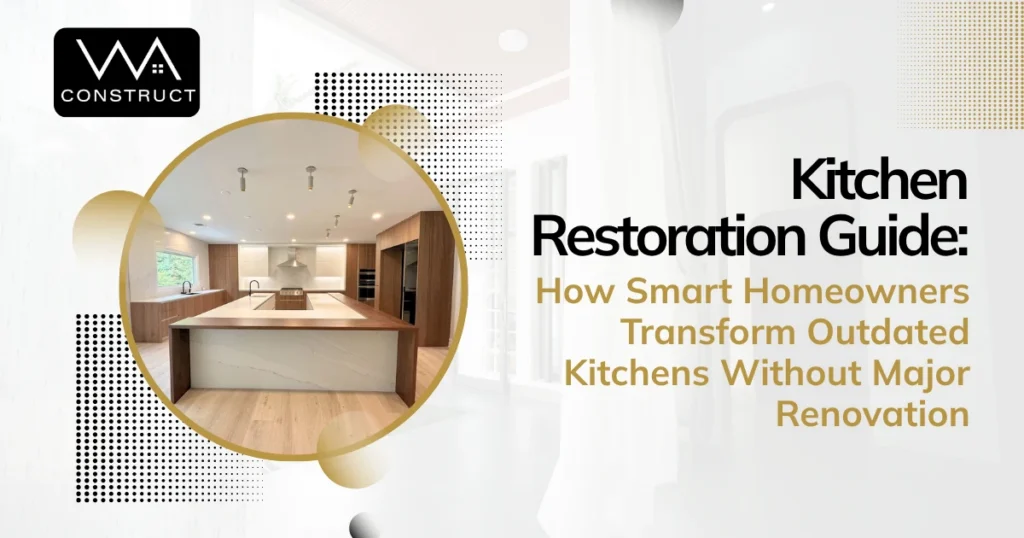
Kitchen Restoration Guide: How Smart Homeowners Transform Outdated Kitchens Without Major Renovation
Not every outdated kitchen needs to be gutted to become beautiful again.
If your kitchen still has solid cabinet boxes, a functional layout, and materials that have aged gracefully, you may not need a full renovation. What you need is a clear restoration plan, one that preserves what’s worth keeping, upgrades what truly matters, and delivers a transformation without the timeline, disruption, or waste of tearing everything down to the studs.
Kitchen restoration isn’t about settling for less. It’s about making strategic decisions that protect your home’s existing quality while creating a space that feels fresh, functional, and designed for how you actually live. When approached thoughtfully, restoration can deliver the transformation you want through smart home remodeling that preserves what works and upgrades what matters.
This guide will help you understand what kitchen restoration really means, when it makes sense, and how to decide whether your kitchen needs restoration, refacing, replacement, or a full remodel.
What Kitchen Restoration Actually Means
Kitchen restoration is a preservation-focused approach that revives existing elements instead of replacing everything. It’s not about cutting corners; it’s about honoring quality craftsmanship, reducing unnecessary waste, and making smart upgrades where they actually matter.
Restoration works when your kitchen has good bones. That means cabinet boxes are structurally sound, the layout still supports how you cook and entertain, and core materials like flooring or countertops can either be refreshed or work well enough alongside updated elements.
The best restoration projects blend preservation with strategic upgrades: refinished cabinets paired with new hardware, updated lighting that highlights original details, and a fresh backsplash that complements existing countertops. The result feels intentional, cohesive, and built to last.
Restoration makes sense when you want to transform your kitchen without months of construction chaos, when sustainability matters to you, or when your home’s existing materials reflect quality that’s difficult or expensive to replicate today.
Kitchen Restoration vs Renovation: What’s The Difference?
Understanding the difference between kitchen restoration and renovation helps you choose the right scope for your project and avoid overspending on changes you don’t actually need.
Kitchen Restoration focuses on preserving what works while upgrading finishes, fixtures, and cosmetic elements. You might refinish cabinets, replace hardware, update lighting, add a backsplash, or refresh countertops, but the layout, cabinet boxes, and core structure stay in place.
Kitchen Renovation typically involves larger-scale removal and replacement. Cabinets come out, walls may be moved, plumbing and electrical systems get rerouted, and the entire kitchen is rebuilt from the ground up. Renovation makes sense when the layout no longer works, when systems are failing, or when you need functional changes that restoration can’t deliver.
Most homeowners don’t need one extreme or the other. The best projects combine restoration of elements worth keeping with targeted replacement of components that are damaged, outdated, or limiting functionality.
Should You Restore, Reface, Replace, Or Renovate?
Choosing the right approach starts with understanding your options. Here’s how to think through each path based on your kitchen’s condition and your goals.
Restore: Best When Cabinets and Layout Are Solid
Restoration is the right choice when your cabinet boxes are structurally sound, your layout works well, and the primary issue is cosmetic, outdated finishes, worn hardware, and tired color schemes. You’ll refinish or repaint cabinets, upgrade hardware and lighting, and refresh surfaces while keeping the kitchen’s core structure intact.
Restore when: Cabinet boxes are solid wood or high-quality plywood, the layout supports your cooking and entertaining needs, and you want a fresh look without major construction disruption.
Reface: Best When Cabinet Boxes Are Strong, But Exteriors Need Updating
Cabinet refacing involves keeping your existing cabinet boxes while applying new veneer to the frames and installing new doors and drawer fronts. It’s more extensive than refinishing but less disruptive than full replacement.
Reface when: Cabinet interiors and boxes are in excellent condition, you’re satisfied with your layout and storage configuration, but doors and visible surfaces are outdated or damaged beyond simple refinishing. Seeing cabinet refacing before and after examples can help you visualize the dramatic transformation possible without full replacement.
Replace: Best When Cabinets Are Damaged, or Layout Needs Changes
Full cabinet replacement makes sense when boxes are structurally compromised, made from low-quality materials like particle board, or when you need to reconfigure storage, change cabinet heights, or improve functionality in ways refacing or restoration can’t achieve.
Replace when: Cabinets show water damage or structural failure, storage doesn’t meet your needs, or you want to change the layout, add islands, or modify cabinet dimensions.
Renovate: Best When Layout, Systems, or Function Need Major Changes
Full renovation is the right path when your kitchen’s layout creates inefficiency, when plumbing or electrical systems need significant updates, when ventilation is inadequate, or when your lifestyle has changed, and the space no longer supports how you cook, host, or gather as a family.
Renovate when: The work triangle doesn’t function well, you need to move major appliances or plumbing, walls need to come down or be added, or your kitchen no longer supports your daily life and long-term needs.
At WA Construct, we help homeowners evaluate these options clearly. Sometimes the answer is obvious. Often, it’s a combination of restoring what’s solid, replacing what’s failing, and renovating specific areas where function demands it. The goal is always the same: give you a kitchen that works beautifully for how you actually live.
How To Know If Your Kitchen Cabinets Are Worth Restoring
Not every cabinet is a good candidate for restoration. Knowing what to look for helps you avoid investing time and resources into materials that should be replaced instead.
Signs Your Cabinets Are Worth Restoring
Solid wood construction: Cabinets made from solid wood or quality plywood have the structural integrity to handle refinishing and will look better and last longer than most new budget options.
Strong joinery: Open doors and drawers, check corners and joints. If connections are tight and stable, the boxes are worth keeping.
Functional hardware: Hinges and drawer slides that still operate smoothly (or can be easily replaced) indicate cabinets with years of life left.
Good layout: If your current configuration supports your cooking habits, traffic flow, and storage needs, there’s no reason to tear it out.
Cosmetic issues only: Scratches, dated color, worn finish, or outdated hardware are all surface-level problems that restoration solves beautifully.
Signs Your Cabinets Should Be Replaced
Particle board or low-quality materials: These materials don’t hold up to refinishing and often show water damage, sagging shelves, or failed joinery.
Water damage or soft spots: Any cabinet box with moisture damage, warping, or soft areas should be replaced, not restored.
Failing doors or drawer boxes: If doors won’t close properly or drawer boxes are falling apart, restoration won’t solve the underlying structural problems.
Inadequate storage or poor layout: Restoration can’t add cabinets, change heights, or fix a layout that doesn’t work for your needs.
When cabinet damage, layout changes, plumbing, electrical work, or structural updates are involved, hiring a general contractor for a kitchen remodel becomes the safer path than trying to restore everything alone. Professional assessment prevents costly mistakes like restoring cabinets that should be replaced or replacing cabinets that could have been beautifully restored.
Kitchen Cabinet Restoration Ideas That Create Major Impact
Strategic restoration focuses on high-visibility upgrades that transform how your kitchen looks and feels without unnecessary replacement.
Cabinet Refinishing or Repainting
Refreshing cabinet finishes is the single most impactful restoration move. Whether you’re updating stain, painting over outdated wood tones, or transitioning to a modern color, the right finish makes cabinets look brand new. Professional-grade finishes are designed to cure harder, resist moisture better, and perform more reliably than standard wall paint.
Hardware and Hinge Upgrades
New pulls, knobs, and hinges transform your kitchen’s style instantly. Upgrading from dated brass to brushed nickel, from traditional to modern pulls, or from exposed to hidden hinges creates a completely different aesthetic without touching cabinet boxes.
Lighting That Changes Everything
Under-cabinet LED strips, pendant lights over islands, and improved recessed ceiling fixtures change how your kitchen looks and functions. Better lighting makes tasks easier, highlights design details, and creates an ambiance you can adjust for cooking, entertaining, or family time. This is also an eco-friendly kitchen restoration move that reduces energy consumption.
Backsplash Updates
Adding a backsplash where none exists or updating outdated tile defines your kitchen’s personality. Extending tile to the ceiling creates a dramatic visual impact. Choosing materials that complement existing countertops ties the whole space together.
Countertop Refresh or Strategic Replacement
Dated laminate countertops undermine even beautifully restored cabinets. Depending on the condition, you might resurface with epoxy coatings, add butcher block sections for warmth, or replace countertops entirely while keeping cabinets. The key is balancing what to preserve with what to upgrade for maximum impact.
Improved Storage and Organization
Pull-out shelves, drawer organizers, lazy Susans, and specialized storage inserts make existing cabinets work harder. Strategic open shelving on one wall (not everywhere) adds visual interest while displaying items you want seen.
Appliance and Fixture Updates
New faucets, sinks, and appliances paired with restored cabinets create a cohesive, updated look. Water-efficient fixtures and energy-saving appliances improve function while reducing long-term operating costs.
DIY Kitchen Restoration vs Professional Kitchen Restoration
Many homeowners consider DIY restoration to control the process and work at their own pace. There’s a place for hands-on work, but understanding the limits of DIY prevents costly mistakes.
When DIY Might Work
Small cosmetic updates, such as painting one accent wall, installing new hardware, and adding a peel-and-stick backsplash, can be successful DIY projects if you have time, patience, and realistic expectations about finish quality.
Full cabinet refinishing is far more demanding. It requires a proper workspace, a climate-controlled environment, specialty products, and a significant time investment. Most homeowners underestimate the prep work required and discover too late that cabinet finishing demands more precision than a typical DIY project.
When Professional Help Makes Sense
Professional kitchen restoration delivers factory-quality finishes, predictable timelines, and results that last. Experienced contractors know which prep steps matter, which products perform in kitchen environments, and how to handle complications that emerge during the process.
Beyond finishes, any work involving plumbing, electrical, ventilation, structural changes, or layout modifications requires professional expertise. The wrong approach can damage cabinets worth saving, create finishes that fail prematurely, or, in the case of systems work, create safety issues or code violations.
Budget Planning For Kitchen Restoration Without Exact Price Guesswork
One of kitchen restoration’s biggest advantages is flexibility. Unlike a full renovation that requires completing everything at once to make the space functional, restoration lets you phase work based on priorities and available resources.
Final investment depends on scope, material selections, cabinet condition, and whether you hire professionals or tackle certain elements yourself. What matters more than exact figures is understanding how to allocate resources where they create maximum impact.
How Restoration Protects Your Budget
Preservation reduces waste: Keeping solid cabinet boxes, functional layouts, and quality materials eliminates the cost of removing and replacing elements that still work.
Phasing spreads investment: You can refinish cabinets now, update lighting next quarter, and replace countertops when budget allows. Full renovation requires completing everything simultaneously.
Focus creates impact: Investing in high-visibility elements like cabinet finishes, hardware, and lighting transforms how your kitchen looks without addressing every surface.
Professional planning prevents mistakes: Clear assessment upfront identifies what’s worth restoring and what should be replaced, avoiding wasted spending on doomed materials or unnecessary replacement of elements that could be saved.
The cheapest option isn’t always the best long-term value. Cutting corners on prep work, using the wrong products, or skipping professional help for complex work often means redoing the project sooner and spending more overall than if you’d done it right the first time.
In compact spaces, homeowners often compare restoration with full remodeling, especially when trying to understand how much is a kitchen remodel for a small kitchen and what each approach actually involves.
Eco-Friendly Kitchen Restoration: Preserve More, Waste Less
Kitchen restoration is inherently sustainable. By preserving existing materials, you keep cabinets, countertops, and fixtures out of landfills while avoiding the environmental impact of manufacturing and shipping replacement products.
But you can go further. Choosing low-VOC paints and finishes improves indoor air quality. LED lighting can reduce energy use compared to older incandescent fixtures while improving visibility and ambiance. Water-efficient faucets reduce consumption without sacrificing performance. Salvaged or locally-sourced materials minimize transportation emissions.
The most sustainable decision is choosing timeless design over trendy finishes that feel dated in five years. Quality materials and classic aesthetics last decades, eliminating the need for repeated updates that multiply environmental impact through continuous resource consumption.
When Kitchen Restoration Isn’t Enough
Restoration has clear limits. Recognizing them prevents investing resources in surface fixes when your kitchen needs structural solutions.
Layout problems: If your sink, stove, and refrigerator form an inefficient triangle, if traffic flow creates collisions, or if you lack adequate prep space, restoration won’t fix it. These are spatial problems requiring reconfiguration.
Structural damage: Water-compromised cabinet boxes, failing drawer boxes, warped frames, or soft spots need replacement, not refinishing.
System failures: Outdated electrical systems that can’t handle modern appliances, plumbing that doesn’t meet code, or inadequate ventilation require intervention beyond cabinet refinishing.
Storage inadequacy: If you simply don’t have enough cabinets, need different heights, or require better organization than your current configuration allows, restoration preserves an inadequate setup.
Lifestyle changes: If your kitchen no longer supports how you cook, host, or gather as a family, if you’ve outgrown the space, or your needs have fundamentally shifted, you may need remodeling that transforms function, not just aesthetics.
This is where honest professional assessment matters most. At WA Construct, we help homeowners distinguish between cosmetic issues restoration solves beautifully and structural or functional problems that need a different approach. Sometimes the answer is full renovation. Sometimes it’s a strategic restoration of certain elements paired with the targeted replacement of others. The right path depends on your kitchen’s condition and your long-term goals.
Common Kitchen Restoration Mistakes To Avoid
Skipping Proper Prep Work
The finish you see is only as good as the surface beneath it. Skipping thorough cleaning, damage repair, and proper sanding shows immediately and fails prematurely. Professional preparation isn’t optional; it’s the difference between finishes that last two years and finishes that last twenty.
Using Wrong Products
Wall paint isn’t cabinet paint. Standard primer isn’t a stain-blocking primer. Kitchen environments demand products formulated for moisture, heat, and daily wear. Using incorrect materials costs twice: once for products that do not work, and again when you have to strip and restart with proper supplies.
Ignoring Environment and Cure Time
Paint cures through chemical processes affected by temperature and humidity. Working in unheated spaces during winter or humid areas during summer compromises finishes that look acceptable initially but fail quickly under use. Rushing cure time between coats creates similar problems.
Restoring What Should Be Replaced
Structural damage, water compromise, and failing mechanisms need replacement. Investing resources in materials that should be torn out wastes time and budget that should fund proper solutions.
Not Testing First
Always test your complete process, cleaning, priming, painting, and sealing on one door or drawer front before committing to the entire kitchen. Discovering product incompatibilities or technique issues after finishing 30 cabinet doors is expensive education you don’t want.
Planning Your Kitchen Restoration The Right Way
Successful restoration follows a clear sequence. Skipping steps creates problems that force expensive backtracking.
Start With An Honest Assessment
Document what you have: cabinet condition, appliance age, layout functionality, lighting adequacy, and storage effectiveness. Then define what you want: aesthetic goals, functional improvements, must-haves versus nice-to-haves. This clarity prevents scope creep and keeps projects focused.
A clear step-by-step kitchen remodel guide can also help homeowners sequence decisions logically and avoid backtracking.
Create Cohesive Vision Before Purchasing
Pinterest inspiration helps, but physical sample boards with actual paint chips, hardware, and material samples show how elements work together in your specific lighting. This prevents expensive mismatches discovered after installation.
Sequence Work Logically
Work top to bottom, inside to outside. Paint ceilings before walls, walls before cabinets. Complete cabinet restoration before installing countertops or backsplash. Finish floors last to avoid damage during other work. Logical sequencing prevents protecting completed work or redoing steps.
Don’t Skip Finishing Details
The final 10% of work creates 50% of the impact. Touch-ups, precise hardware installation, thorough caulking, and deep cleaning separate good projects from great ones. This is where restoration transcends preservation and becomes true transformation.
Many homeowners who begin with kitchen restoration also consider other high-use spaces. Understanding ideas and costs of kitchen and bathroom remodeling helps you plan improvements in a logical sequence, completing one space fully before starting the next, avoiding perpetual construction chaos that tests patience and relationships.
Your Kitchen Restoration Decision Starts Here
Kitchen restoration offers a smarter path when your space has solid bones but needs a fresh perspective. It’s not about settling; it’s about making strategic decisions that honor existing quality while creating a kitchen that feels beautiful, functions well, and supports how you actually live.
The homeowners who love their results aren’t always the ones who spent the most or did the most work. They’re the ones who made decisions aligned with their kitchen’s actual condition and their long-term needs, not contractor convenience or Instagram inspiration.
At WA Construct, we help homeowners in North and Central New Jersey understand these options clearly. Sometimes restoration is perfect. Sometimes refacing makes more sense. Sometimes, a full renovation is the honest answer. The right path depends on your kitchen’s structure, your lifestyle needs, and what you’re trying to achieve.
What separates transformative projects from regrettable ones isn’t the size of the investment; it’s the clarity of planning, the quality of execution, and the honesty of assessment before work begins.
Wondering whether your kitchen needs restoration, refacing, or a full remodel? Schedule a call with WA Construct to evaluate your space clearly and choose the path that makes the most sense for your home.
Connect with Our Trusted Experts Today — 📞 201-485-8887
Kitchen restoration preserves the existing layout, cabinets, and core structure while updating finishes, hardware, lighting, and surfaces. Renovation is more involved and may include new cabinets, layout changes, plumbing updates, electrical work, or structural changes.
Cabinets are worth restoring if the boxes are solid, the joints are stable, and the main issues are cosmetic, such as worn finishes or outdated hardware. If there is water damage, a weak structure, or a poor layout, replacement may be the better option.
Small updates like new hardware or simple paint touch-ups can be DIY-friendly. Full cabinet refinishing is more complex and often needs proper prep, specialty products, and a controlled workspace to get a durable finish.
Kitchen restoration usually takes less time than a full renovation because it preserves the existing layout and major components. The exact timeline depends on the scope, cabinet condition, materials, and number of upgrades involved.
In many cases, yes. Restoration can help protect the budget by preserving cabinets, layout, and functional elements instead of replacing everything. It also allows homeowners to phase updates over time.
Restoration reduces waste by keeping usable cabinets, surfaces, and fixtures out of landfills. Low-VOC finishes, LED lighting, water-efficient fixtures, and durable materials can make the project even more sustainable.
Choose renovation when the layout no longer works, cabinets have structural damage, plumbing or electrical systems need major updates, or the kitchen no longer supports how your family cooks, hosts, or gathers.
Common mistakes include skipping prep work, using the wrong products, ignoring humidity or cure time, restoring damaged cabinets, and not testing finishes first. A professional assessment helps avoid these issues.