
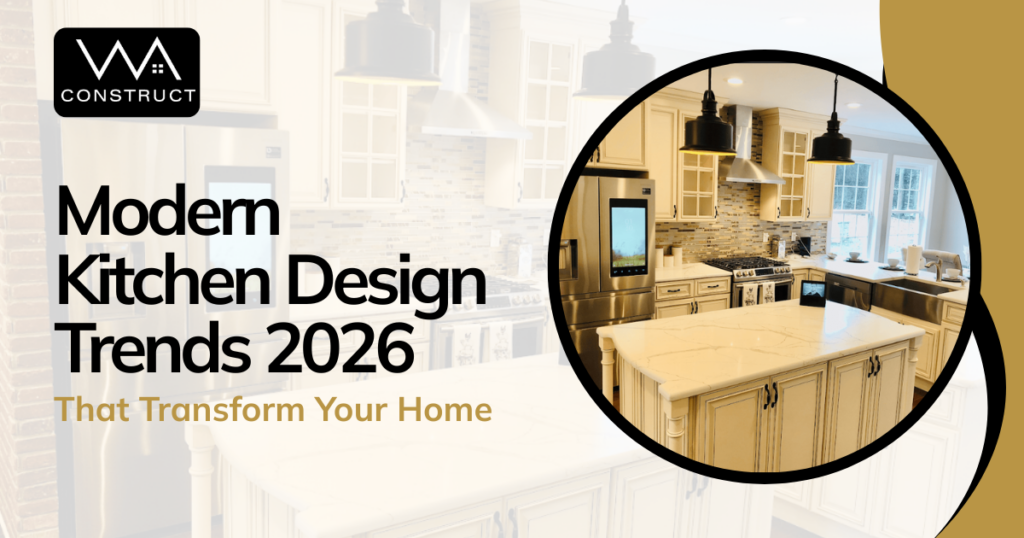
The Kitchen Trends 2026: What Modern Kitchen Design Trends Really Mean for Your Home
For nearly twenty years, WA Construct has been building luxury kitchens across North and Central New Jersey. We’ve learned to tell the difference between what design magazines predict and what really happens when our clients spend big on their homes.
The kitchen trends of 2026 we’re tracking aren’t coming from Pinterest boards. They’re coming from real projects, client meetings, and what we’re seeing in how people want to live in their kitchens.
This isn’t about what’s trendy. It’s about what’s really changing in modern kitchen design trends and how families invest in their homes.
Many of these shifts also shape the direction outlined in 12 Kitchen Remodeling Ideas & Designs to Transform Your Home, where design ideas are evaluated through the lens of long-term function and value.
Sustainability Moved from Optional to Expected
Sustainable kitchen materials in 2026 have become must-haves in high-end kitchen projects.
These materials last longer and hold their value better than synthetic alternatives.
According to industry research, eco-friendly materials “aren’t just good for the planet; they’re durable, low-maintenance, and often cost-effective in the long run.”
These sustainable kitchen materials in 2026, such as bamboo that performs better than traditional hardwood when wet and recycled glass countertops that look better than engineered stone, represent a significant shift.
These materials aren’t second-best. They’re upgrades that also help the planet.
Smart Technology That Actually Earns Its Keep
There’s smart technology that adds value, and there’s smart technology that creates problems.
We’ve watched clients get excited about refrigerators with cameras and touchscreens inside. Then those same features become frustrating within months. The technology our clients really pay extra for? The kind you don’t notice.
Voice-controlled lighting that changes throughout the day. Cooktops with exact temperature control. Energy systems that show you real data on what you’re using.
At CES 2026, Samsung showcased voice-controlled refrigerator doors that respond to commands, positioning smart fridges as “intelligent assistants that make life easier, healthier, and more efficient.”
But just being connected doesn’t mean it’s valuable. Smart appliances come with real downsides: higher costs up front, the need for software updates, privacy concerns, and limited ability to work with other brands. The best smart kitchen technology trends focus on systems that fit into daily life rather than demanding your attention.
Before committing to high-ticket upgrades, it’s critical to understand What Your Kitchen Remodel Actually Costs and How to Control It so trends don’t quietly inflate your budget.
This is exactly what we explore in Smart Kitchen Upgrades That Add Real Value, where we break down which improvements truly increase usability and resale potential.
Minimalism Gets Misunderstood
Everyone talks about minimalist kitchen design ideas. Most people get it wrong when it comes to functional spaces.
It’s not about having less stuff. It’s about building smart systems that reduce daily choices and visual clutter.
Our minimalist kitchen design ideas focus on specific zones for different tasks, storage that makes common items easy to reach, and surfaces that stay clear because everything has its place.
According to Houzz data, many homeowners are adding pullout cabinets for trash and recycling to keep them hidden. Specialty storage for cookie sheets, spices, and deep drawers is becoming standard.
This takes more planning, not less money. True minimalism costs more because it needs precision in every detail, custom drawer dividers, hidden appliance panels, and storage solutions built for exactly how the family works.
The result isn’t empty. It’s easy.
Open Shelving: Function Meets Display
The open shelving kitchen trend keeps growing, but not for the reasons most people think.
This isn’t about creating magazine-perfect displays. These open shelving kitchen trend setups work because they make items you use often easy to grab while forcing you to choose carefully what stays visible.
We’re installing open shelving in smart spots, near prep areas for oils and spices, next to coffee stations for mugs and supplies, and beside stoves for everyday cookware. The key is pairing open storage with plenty of closed cabinets to balance easy access and visual calm.
Bold Cabinet Colors Signal Something Deeper
Kitchen design has long used white cabinets and neutral colors.
That’s changing with the rise of bold kitchen cabinet colors in 2026.
These bold kitchen cabinet colors for 2026, deep navy cabinets, forest green islands, and even matte black full walls—show a shift in homeowner confidence. According to the National Kitchen & Bath Association, neutrals remain most popular, with greens and blues also growing.
Biophilic Design as Health Infrastructure
Biophilic kitchen design focuses on natural rhythms, better air quality, and stress reduction through nature-based design.
The data backs this up. Natural lighting ranks as the most important kitchen design factor to homeowners, followed by quality lighting, according to NKBA research.
Biophilic kitchen design includes large windows placed to bring in natural light all day, living plant walls that clean the air, and natural stone and wood surfaces that feel good to touch.
These elements cost more up front, but clients understand they’re investing in daily health, not just looks. The return isn’t measured in resale value. It’s measured in how you feel cooking breakfast every morning.
Islands Became the New Great Room
Kitchen islands with many uses aren’t new. How families use them is changing fast.
Our multifunctional kitchen island ideas center on spaces that work as prep stations, dining areas, homework zones, and social hubs all at once. They’re replacing formal dining rooms as the main gathering space in homes.
The best multifunctional kitchen island ideas include large central islands with surfaces built for many purposes, equipped with charging ports, storage, beverage coolers, and comfortable seating.
This means rethinking everything: different heights for different activities, built-in power for devices, storage you can reach from multiple sides, and seating that works for both quick meals and long talks.
The island isn’t kitchen furniture anymore. It’s the center of how modern families live together.
The Lighting Revolution Most Contractors Miss
Most contractors treat kitchen lighting as something to add at the end. A few recessed lights and some under-cabinet strips.
They’re missing the kitchen lighting trends of the 2026 revolution in advanced lighting systems that adapt to natural rhythms and different tasks.
We’re installing systems with LEDs that change color temperature throughout the day, task lighting with dimming controls for different activities, and smart sensors that adjust based on natural light levels.
According to NKBA data, under-cabinet lights, interior cabinet lights, and pendant lights top the lighting choices list.
These kitchen lighting trends for 2026 create spaces that support different activities and times of day.
What This Means for Your Kitchen Investment
If you’re planning a kitchen update, here’s what matters:
Invest in features that build value over time, not looks that chase short-lived trends.
Whether you’re considering a full redesign or exploring inexpensive kitchen renovations, the same rule applies: invest in upgrades that improve how the space functions long-term, not just how it photographs.
Materials that last longer than alternatives. Smart technology that fits into daily life. Systems that remove problems rather than create them. Natural elements that support your health, not just your Instagram feed.
The NKBA reports that experts expect kitchens to get bigger even as overall home sizes get smaller, with kitchens becoming “a more intelligent, personalized, and health-conscious space that supports modern lifestyles.”
More homeowners are doing renovations because they finally have the money, and many want improvements to boost resale value.
The kitchen trends of 2026 that will define this year aren’t about following what’s popular. They’re about understanding how investment, function, and lifestyle change intersect in modern kitchen design trends.
That’s not a prediction. That’s pattern recognition from a firm that’s been watching it happen in real time.
Building Your Kitchen for How You Actually Live
These kitchen trends for 2026 aren’t about copying what you see in magazines. They’re about creating spaces that work for real life, how you cook, how you gather, and how you live every single day.
The best kitchen investments don’t just look good. They solve problems. They reduce stress. They bring your family together. They make daily tasks easier and more enjoyable.
Whether it’s sustainable materials that last decades, smart technology that truly helps, or lighting that supports your natural rhythms, every choice should serve how you want to live in your home.
That’s what separates a trendy kitchen from a transformative one.
Ready to Build a Kitchen That Works for Your Life?
WA Construct has been turning kitchen visions into reality across North and Central New Jersey for nearly two decades. We don’t just follow trends; we build kitchens based on how you actually live.
From the first design conversation to the final walkthrough, we guarantee timelines, eliminate surprises, and deliver spaces that transform how you experience your home every day.
Schedule your free consultation today. Let’s talk about what you want your kitchen to do for you, not just how you want it to look.
Your kitchen should work as hard as you do. Let’s build it together.
Frequently Asked Questions
A: Sustainable materials, smart technology that fits daily life, minimalist design, bold cabinet colors, biophilic elements, open shelving, multifunctional islands, and advanced lighting systems.
A: White kitchens remain popular, but bold colors like navy, forest green, and matte black are growing as homeowners build for themselves rather than future buyers.
A: Neutrals remain most popular, with greens and blues gaining traction as homeowners embrace bolder, more personal color choices.
A: Yes, open shelving continues to grow when paired with closed storage, placed strategically for items used daily, and balanced with visual calm.
A: Sustainable materials that last decades, invisible smart technology, natural lighting, multifunctional islands, and storage systems built for how families actually live.