
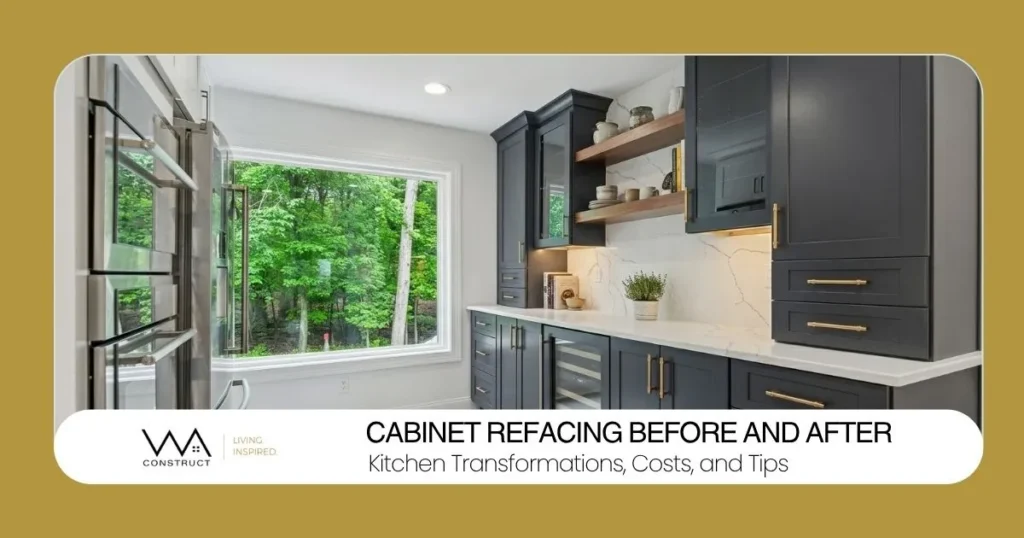
Cabinet Refacing Before and After: Kitchen Transformations, Costs, and Tips
Kitchen cabinets shape a major part of how your kitchen looks and feels. When they appear dated, worn, too dark, or disconnected from the rest of the home, the entire kitchen can feel older than it really is.
For many New Jersey homeowners, home remodeling does not always begin with a full renovation. Sometimes it begins with a focused question: Can the kitchen be improved by updating the cabinets, or does the space need a more complete remodel?
Cabinet refacing before and after results can be dramatic when the existing cabinet boxes are solid, the layout works well, and the goal is to refresh the visible surfaces without changing the entire kitchen footprint. New doors, drawer fronts, side panels, trim, and hardware can make an outdated kitchen feel cleaner, brighter, and more current.
But cabinet refacing is not the right solution for every kitchen. If the layout is poor, storage is limited, cabinet boxes are damaged, or plumbing and electrical systems need attention, replacement, or a broader kitchen remodel may be the better long-term investment.
This guide explains when cabinet refacing makes sense, when replacement is smarter, what cost factors to consider, and how to evaluate cabinet refacing transformations with a more informed eye.
What Cabinet Refacing Actually Involves
Cabinet refacing keeps the existing cabinet boxes in place while updating the parts you see and touch every day.
The process typically includes:
- Removing existing cabinet doors and drawer fronts
- Applying new veneer, laminate, or another finish to visible cabinet box surfaces
- Installing new cabinet doors and drawer fronts
- Updating hinges, handles, knobs, or pulls
- Replacing exposed side panels, end panels, or trim when needed
- Making minor repairs to cabinet boxes if they are otherwise sound
The layout stays the same. Plumbing and electrical usually stay in place. Countertops may remain if they are not being replaced. This is why refacing can create a strong visual change with less disruption than full cabinet replacement.
If you are comparing refacing with larger kitchen updates, a kitchen restoration guide can help clarify whether your project needs a cosmetic refresh, selective improvements, or a more complete renovation plan.
When Cabinet Refacing Makes Sense
Cabinet refacing delivers the best value when your existing cabinet structure is in good condition, and the current layout still works for your family.
It may be a smart option when:
- Cabinet boxes are structurally sound
- The kitchen layout functions well
- You want a new visual style without changing the footprint
- Storage needs are mostly being met
- You want less disruption than a full remodel
- Countertops, backsplash, flooring, and appliances still work with the plan
A dated honey oak kitchen, for example, can shift into a brighter transitional space with white shaker doors, matte black hardware, and cleaner side panels. A dark cherry kitchen can feel less heavy when refaced with warm natural wood veneer, simplified door profiles, and updated lighting. A traditional kitchen can become more modern without changing the footprint by replacing ornate raised-panel doors with flat or shaker fronts.
The key is making sure the existing cabinet boxes are worth investing in. Refacing should improve a kitchen that already functions well, not cover up deeper layout or quality problems.
For homeowners who are unsure whether refacing is enough, understanding what to expect when hiring a general contractor for a kitchen remodel can make it easier to evaluate the right project scope before money is spent in the wrong direction.
When Cabinet Replacement Is the Better Choice
Cabinet replacement becomes the stronger option when the existing cabinets cannot support a lasting result.
Replacement may be better when:
- Cabinet boxes are warped, damaged, or poorly built
- There is water damage, swelling, mold, or structural weakness
- The kitchen layout no longer works
- You need more storage or better organization
- You want to move appliances, plumbing, or electrical
- Existing cabinets are too low-quality to justify refacing
- You are already planning a larger kitchen remodel
Refacing can make cabinets look better from the outside, but it cannot fix poor construction, awkward storage, or a layout that does not support how your family uses the kitchen.
A trustworthy contractor should explain both options clearly. If refacing is a smart investment, they should say so. If replacement or a larger remodel is the better long-term decision, they should be honest about that, too.
Cabinet Refacing Before and After Transformations
The most impressive kitchen cabinet refacing before and after projects are not just about swapping doors. They work because the new cabinet style, finish, hardware, and surrounding kitchen elements feel connected.
Dark to Light Cabinet Transformations
One of the most common refacing transformations is moving from dark or orange-toned wood to lighter finishes.
A kitchen with dated honey oak cabinets can feel instantly brighter with soft white, warm gray, or natural light wood doors. The same kitchen footprint can feel larger simply because the cabinetry reflects more light and reduces visual heaviness.
Traditional to Transitional Updates
Many older kitchens have raised-panel doors, arched profiles, decorative trim, or heavy hardware that make the space feel dated.
Refacing with simple shaker doors, cleaner rails, and updated hardware can keep warmth in the kitchen while making the overall look more current. This is especially effective when the homeowner does not want a cold or overly modern kitchen.
Heavy Wood to Warm Natural Veneer
Not every refacing project needs painted cabinets.
A dark cherry or dated brown kitchen can be softened with a warm natural wood veneer, cleaner door profiles, and subtle hardware. This approach works well for homeowners who want the kitchen to feel updated but still rich, warm, and connected to the rest of the home.
Ornate to Minimal Cabinet Styles
Some kitchens feel busy because there are too many visual details: decorative corbels, heavy trim, busy door profiles, and mixed hardware.
Refacing with flat-panel or simple shaker fronts can calm the entire room. The kitchen does not lose personality; it gains clarity.
Hardware and Detail Upgrades
Hardware has a bigger impact than many homeowners expect.
Matte black, brushed nickel, polished nickel, brass, or champagne bronze hardware can change the feel of the kitchen. Soft-close hinges and drawer upgrades can also improve the daily experience of using the cabinets, not just the appearance.
The strongest cabinet refacing transformations feel intentional. The cabinets should coordinate with the countertop, backsplash, flooring, lighting, and overall style of the home.
Cabinet Refacing Cost Before and After: What Affects the Investment?
Cabinet refacing cost before and after results can vary widely depending on the size of the kitchen, the materials selected, and the amount of detail involved.
Even if a contractor does not publish fixed pricing online, homeowners should understand the main cost drivers before comparing options.
Number of Doors and Drawers
The more cabinet doors and drawer fronts you have, the more material and labor the project requires.
A small kitchen with fewer cabinet fronts may be more straightforward, while a larger kitchen with a full wall of cabinetry, pantry cabinets, island cabinets, and built-ins will require a larger investment.
Material Type
Wood veneer, laminate, and rigid thermofoil all perform differently and come with different cost expectations.
Wood veneer typically creates a more premium look but may require more care. Laminate can offer a wide variety of colors and patterns. Rigid thermofoil can provide a smooth painted appearance, but it must be considered carefully around heat and moisture.
Door Style
Simple slab or shaker-style doors are usually more straightforward than highly detailed custom profiles.
Door thickness, construction quality, finish type, and custom sizing all affect the final cost.
Hardware and Hinges
Cabinet hardware can range from simple and cost-effective to premium designer selections.
Soft-close hinges, upgraded drawer glides, specialty pulls, and custom hardware layouts can increase the investment but also improve daily use.
Side Panels, Trim, and End Details
Refacing is not only about doors and drawers. Exposed side panels, island backs, toe kicks, crown molding, light rails, fillers, and trim pieces may also need to be updated for the transformation to look complete.
Skipping these details can make the project feel unfinished.
Cabinet Box Repairs
If the cabinet boxes need minor repairs, reinforcement, cleaning, or surface preparation, that work should be included in the scope.
If the boxes need major repair, replacement may be the better option.
Painted vs. Wood-Grain Finish
Painted finishes and wood-grain finishes create different looks and may involve different preparation, materials, and maintenance considerations.
The right choice depends on your desired style, lighting, existing finishes, and long-term expectations.
Related Kitchen Updates
Sometimes cabinet refacing leads homeowners to consider other updates, such as countertops, backsplash, lighting, flooring, or appliances.
This is where planning matters. A cabinet update should not make the rest of the kitchen feel more outdated by comparison. If several areas need attention, it may be worth comparing refacing with a broader kitchen update.
Choosing the Right Materials for Refaced Cabinets
Material selection plays a major role in how cabinet refacing looks, performs, and ages.
The right material should match your design goals, cooking habits, maintenance expectations, and the amount of daily use your kitchen receives.
Wood Veneer
Wood veneer provides the look and feel of real wood. It can create a warm, authentic, high-end result when installed properly.
It is often a good choice for homeowners who want natural grain, richness, and a more elevated finish. However, it should be selected with care, especially in kitchens with high moisture, heavy use, or strong sunlight.
Laminate
Laminate offers a broad range of colors, patterns, and finishes. Modern laminates are much more refined than older versions and can work well in certain kitchen styles.
Laminate may be a practical choice for homeowners looking for durability and design flexibility without choosing real wood.
Rigid Thermofoil
Rigid thermofoil can create a smooth painted look and is often easy to clean. It can be useful in certain applications, but heat exposure and long-term peeling risks should be discussed before selecting it.
Material performance depends on installation quality, heat conditions, moisture exposure, and daily use.
Hardware and Functional Upgrades
Cabinet refacing is also an opportunity to improve function.
Soft-close hinges, updated drawer glides, pull-out organizers, trash pull-outs, tray dividers, and interior storage accessories can make the kitchen easier to use without changing the entire layout.
These upgrades should be discussed early so they are included in the scope and budget.
Cabinet Refacing vs. Broader Kitchen Remodeling
Cabinet refacing can be an excellent choice when the cabinet boxes are strong and the kitchen works well. But it is only one option within a larger kitchen improvement conversation.
Some homeowners begin by considering cabinet refacing and later realize that the kitchen also needs improved storage, better lighting, new flooring, updated backsplash, modern appliances, or layout changes.
This is where project planning becomes important. If the cabinets are the only major issue, refacing may make sense. If several parts of the kitchen are outdated or underperforming, broader planning may deliver better long-term value.
Homeowners comparing cabinet updates with larger improvements often benefit from reviewing kitchen and bathroom remodeling ideas so they can understand how cabinetry, layout, lighting, materials, and daily function all connect before choosing a direction.
Hidden Costs to Watch for in Cabinet Refacing Projects
Cabinet refacing can be more predictable than a full remodel, but it still needs a clear scope.
Unexpected costs often appear when the contractor has not fully evaluated the existing cabinets, measurements, materials, or finish details before work begins.
Common cost issues include:
- Cabinet boxes needing more repair than expected
- Incorrect measurements
- Side panels or trim not included in the original scope
- Hardware allowances being too low
- Homeowners changing door styles or finishes after materials are ordered
- Soft-close hinges or drawer upgrades being added later
- Existing cabinets being too damaged to support proper refacing
- Countertops, backsplash, or flooring looking mismatched after the cabinet update
The best way to reduce surprises is to clarify the full scope before signing. The proposal should explain what is included, what is excluded, what materials are being used, and how changes will be handled.
How Long Does Cabinet Refacing Take?
Cabinet refacing is usually much faster than a full kitchen remodel.
For an average kitchen, the installation portion often takes several days rather than several weeks or months. However, the full timeline depends on measurements, material ordering, door fabrication, finish selections, scheduling, and the condition of the existing cabinets.
A typical installation may include:
- Removal of old cabinet doors and drawer fronts
- Surface preparation
- Veneer, laminate, or finish application
- Installation of new doors and drawer fronts
- Hardware installation
- Final adjustments and cleanup
Even though the installation can be relatively quick, the planning stage should not be rushed. Measuring, material selection, finish coordination, and hardware decisions all affect the final result.
A kitchen may be disrupted for a shorter period, but the project still deserves careful planning.
DIY Cabinet Refacing Before and After: What Homeowners Should Know
DIY cabinet refacing before and after results can look appealing online, but homeowners should be cautious.
Cabinet refacing requires accurate measurements, clean surface preparation, proper adhesive techniques, precise door alignment, and careful finish work. Small mistakes can become very visible because cabinets occupy so much visual space in the kitchen.
A skilled homeowner may be able to handle simple hardware replacement, painting, or minor cosmetic updates. But full cabinet refacing is more involved than it appears.
DIY risks include:
- Veneer peeling at the corners
- Uneven door gaps
- Poor hinge alignment
- Finish inconsistencies
- Incorrect measurements
- Visible seams
- Damage to existing cabinet boxes
- Materials that do not hold up to heat or moisture
For a kitchen that is central to the home’s value and daily function, professional planning and installation often provide a more reliable result.
Why Planning Matters Before Refacing Cabinets
Cabinet refacing works best when it is part of a clear kitchen plan.
Before selecting doors or finishes, homeowners should consider how the cabinets relate to the rest of the kitchen. Will the new cabinet color work with the countertop? Will the backsplash feel dated afterward? Does the lighting support the new finish? Does the flooring still make sense?
A cabinet-only update can be successful, but it should still be evaluated in context.
Strong planning includes:
- Reviewing the cabinet condition
- Confirming the layout still works
- Selecting materials in the kitchen’s actual lighting
- Coordinating hardware with the overall design
- Checking whether countertops, backsplash, or flooring need to be considered
- Clarifying whether replacement would deliver better long-term value
This is how homeowners avoid spending money on a refresh that still leaves the kitchen feeling unfinished.
What Successful Cabinet Refacing Projects Have in Common
Successful cabinet refacing transformations share several qualities.
They begin with an honest assessment. Refacing is recommended only when the existing cabinet boxes are strong enough to justify the investment.
They include proper preparation. Cabinet surfaces are cleaned, repaired, and prepared correctly so the new material adheres properly and looks smooth.
They use appropriate materials. The selected finish should match the kitchen’s use, moisture conditions, lighting, and desired style.
They include the right details. Side panels, trim, toe kicks, crown molding, hardware, and exposed surfaces should be addressed so the result feels complete.
They coordinate with the rest of the kitchen. The new cabinet finish should work with the countertops, backsplash, flooring, appliances, and lighting.
They are completed with clear communication. The homeowner should understand the schedule, selections, scope, and expectations before work begins.
These details are what separate a polished refacing project from one that looks like a shortcut.
The Cost of Poor Planning in Cabinet Projects
A poorly planned cabinet refacing project can cost more than money. It can leave homeowners disappointed every time they walk into the kitchen.
The doors may not align properly. The veneer may peel. The finish may look different under natural light. The hardware may feel too small or too lightweight. The side panels may not match the cabinet fronts. The kitchen may feel partly updated but not fully resolved.
When refacing fails, the homeowner may end up replacing the cabinets later anyway. That means paying twice for work that should have been planned the first time properly.
A stronger process asks the right questions before decisions are made:
- Are the cabinet boxes worth saving?
- Does the layout work?
- Is storage adequate?
- Will the new finish coordinate with the rest of the kitchen?
- Are there hidden issues that should be addressed first?
- Would refacing, replacement, or a full remodel create the best long-term result?
The goal is not to sell one solution. The goal is to recommend the right one.
The Role of Transparency in Cabinet Refacing
Many construction frustrations come from unclear expectations. Cabinet refacing is no different.
A homeowner should know exactly what is included, what materials are being used, how long the work should take, and what happens if hidden conditions are discovered.
A transparent process includes:
- Clear scope of work
- Defined material selections
- Hardware allowances
- Timeline expectations
- Communication standards
- Change order process
- Written documentation
- Final review and walkthrough
When communication is clear, homeowners feel more confident, and the project runs more smoothly.
Cabinet Refacing vs. Cabinet Replacement: Which Is Right for Your Kitchen?
Choosing between cabinet refacing and replacement depends on cabinet condition, layout, storage, budget, and long-term goals.
Cabinet Refacing May Be Right If:
- Your cabinet boxes are structurally sound.
- Your current layout works well.
- You want a new visual style without moving appliances or utilities.
- Your storage needs are mostly being met.
- You want less disruption than a full remodel.
- The cabinet quality is strong enough to justify the update.
Cabinet Replacement May Be Better If:
- Cabinet boxes are damaged, warped, or poorly built.
- You need more storage or a different layout.
- You want to move appliances, plumbing, or electrical.
- The kitchen has water damage or structural issues.
- You are already planning a larger remodel.
- The existing cabinet interiors no longer support your household’s needs.
A quality contractor should help you evaluate both options without pressure. The right answer depends on what your kitchen needs now and how long you expect the solution to last.
Is Cabinet Refacing Right for Your Kitchen?
Cabinet refacing before and after results can be impressive when the right conditions are in place. If the cabinet boxes are solid, the layout works, and the main issue is visual style, refacing may create a meaningful transformation with less disruption than full replacement.
But if your kitchen has poor storage, damaged cabinets, outdated systems, or a layout that no longer supports your family, cabinet replacement or a broader remodel may be the smarter investment.
The best approach is to evaluate the kitchen honestly before choosing a solution.
Plan the Right Cabinet Update With WA Construct
Not sure whether your kitchen needs cabinet refacing, cabinet replacement, or a more complete remodel? WA Construct helps North and Central New Jersey homeowners evaluate cabinet condition, layout, storage, materials, and long-term value before recommending the right path.
Our design-build approach focuses on thoughtful planning, honest guidance, material clarity, and a renovation strategy that fits the home rather than forcing one solution.
If your kitchen feels outdated but you are unsure where to begin, schedule a consultation with WA Construct to understand which option fits your home best.
Connect with Our Trusted Experts Today — 📞 201-485-8887
Frequently Asked Questions
Cabinet refacing can be worth it when your cabinet boxes are structurally sound, your kitchen layout works well, and your main goal is a visual update. It may offer a strong transformation with less disruption than full replacement. However, if the boxes are damaged or the layout does not function well, replacement may be the better long-term investment.
The installation portion of cabinet refacing often takes several days for an average kitchen, depending on the number of cabinets, material type, finish details, and cabinet condition. Planning, measuring, material selection, and ordering happen before installation begins.
Cabinet refacing keeps the existing cabinet boxes and updates the doors, drawer fronts, visible surfaces, panels, trim, and hardware. Cabinet replacement removes the existing cabinets and installs new cabinetry. Refacing is best when the boxes and layout are still good. Replacement is better when the cabinets are damaged, poorly built, or no longer functional.
Cabinet refacing can make a kitchen look dramatically refreshed from the outside when done professionally with suitable materials and coordinated design choices. The cabinet boxes and layout remain the same, but the visible surfaces, doors, drawers, and hardware are updated.
Cabinets should usually be replaced when the boxes are warped, water-damaged, poorly constructed, or no longer aligned. Replacement is also better when the kitchen needs a new layout, more storage, appliance relocation, or broader remodeling work.
The best material depends on your design goals, budget, maintenance expectations, and daily kitchen use. Wood veneer offers a natural, high-end appearance. Laminate provides design flexibility. Rigid thermofoil can offer a smooth painted look but should be reviewed carefully for heat and moisture conditions.
Professional cabinet refacing should not damage structurally sound cabinet boxes. A contractor should inspect the cabinets first, address minor repairs, and prepare surfaces properly before applying new materials and installing new doors or drawer fronts.
Yes. Cabinet refacing allows homeowners to change door styles without replacing the entire cabinet box. You can move from raised-panel doors to shaker, flat-panel, slab, or other updated styles depending on the look you want and the cabinet structure you have.